Quick Answer: Do Binaural Beats Help You Sleep?
Binaural beats may help some people relax and fall asleep more easily. Research is mixed but promising. Here's what you need to know:
- They require stereo headphones or earphones, one frequency in each ear
- Theta (4–8 Hz) and delta (0.5–4 Hz) frequencies are most commonly used for sleep
- Most people listen for 15–30 minutes before or during sleep
- They work best when combined with good sleep habits, not as a standalone solution
- Results vary between individuals, some notice a difference quickly, others don't
The short answer: Binaural beats won't work for everyone, but they're safe to try and may support relaxation and sleep onset for many people.
What Are Binaural Beats?
Binaural beats are rhythmic pulses you hear when two different sound frequencies play in each ear at the same time. Your brain creates these beats by calculating the difference between the two frequencies.
Here's a simple example: If you hear 300 Hz in your left ear and 310 Hz in your right ear, your brain creates a 10 Hz binaural beat (310 - 300 = 10). This beat doesn't actually exist in the audio—it's created entirely by your brain.
The process works through something called brainwave entrainment. Your brain tries to sync its electrical activity to match the rhythm of the binaural beat you're hearing. This synchronization may influence your mental state, potentially promoting relaxation, focus, or sleep depending on the frequency used.
You need stereo headphones or earphones to experience binaural beats. The frequencies must be separate for each ear. Regular speakers won't work because both ears hear both frequencies.
A Bluetooth sleep mask like the Dreamy Sounds Sleep Mask is ideal for this. You can stream binaural beats wirelessly from any app on your phone while blocking out light completely.
How Do Binaural Beats Work?
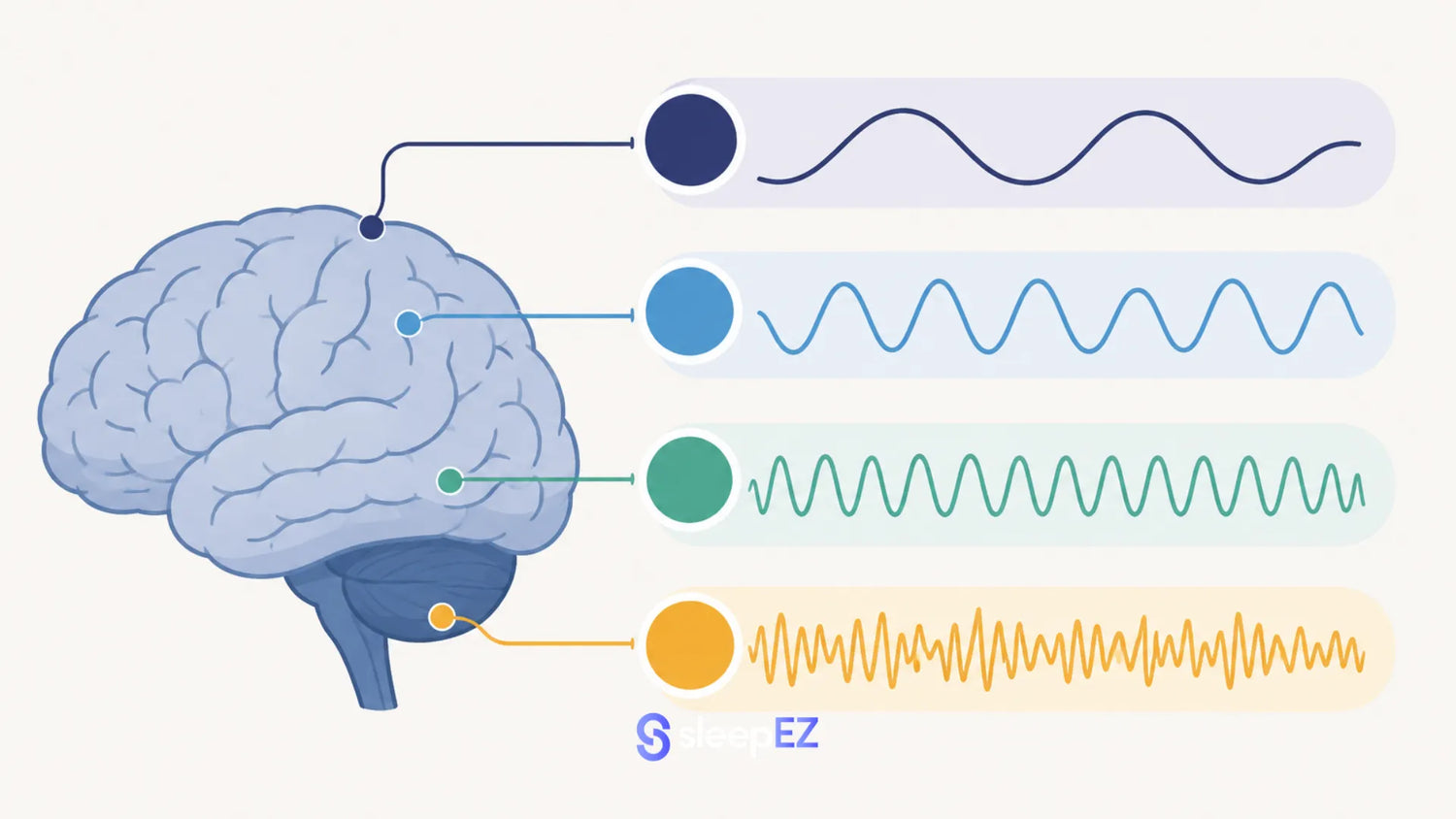
Binaural beats work through a process called brainwave entrainment. This means your brain starts to match its electrical activity to the rhythm of the beats.
Your brain naturally produces electrical waves at different frequencies throughout the day. These brainwaves change based on what you're doing and how you feel.
When you listen to binaural beats, the theory suggests your brain gradually shifts to match the frequency of the beat. If you listen to a 4 Hz binaural beat, your brain might start producing more 4 Hz delta waves, which are linked to deep sleep.
This synchronization doesn't happen instantly. It usually takes 15-30 minutes of consistent listening for your brainwaves to start matching the beat frequency.
Read: Best Bluetooth Sleep Mask in Australia
What Are the Best Binaural Beat Frequencies for Sleep?
Not all binaural beats are equal. The frequency you choose determines the mental state they're designed to support.
Delta (0.5–4 Hz) | Deep Sleep
Delta waves dominate during deep, dreamless sleep. This is when your body repairs tissue and consolidates memory.
Delta-frequency binaural beats are often used by people who want to support deeper, more restorative sleep.
Theta (4–8 Hz) | Falling Asleep
Theta waves occur during light sleep, meditation, and the drowsy state just before sleep. Many sleep-focused recordings use theta frequencies because they're associated with the transition from wakefulness to sleep.
Alpha (8–12 Hz) | Relaxation Before Bed
Alpha waves occur during calm, relaxed wakefulness, like daydreaming or quiet reading. Alpha-frequency binaural beats may be useful for winding down in the hour before bed, rather than during sleep itself.
| Frequency | Range | Best Used For |
|---|---|---|
| Delta | 0.5–4 Hz | Deep sleep support |
| Theta | 4–8 Hz | Falling asleep |
| Alpha | 8–12 Hz | Pre-sleep relaxation |
| Beta | 14–30 Hz | Focus (avoid at night) |
| Gamma | 30–100 Hz | High alertness (avoid at night) |
Most sleep-focused recordings use theta or delta frequencies because they're associated with relaxation and sleep onset. If you're new to binaural beats, theta (4–8 Hz) is a good starting point.
How Long Do Binaural Beats Take to Work?
This is one of the most common questions, and the honest answer is: it varies.
In a single session, brainwave entrainment typically takes 15–30 minutes of consistent listening. Your brain needs time to gradually synchronise with the beat frequency.
Don't expect instant results.
Across multiple nights, many people report noticing a difference after 1–2 weeks of consistent use. Some studies used binaural beats for 4–6 weeks before measuring results.
Key factors that affect how quickly they work:
- Consistency of use (nightly vs. occasional)
- Volume level (too loud can be counterproductive)
- Background noise in your environment
- Individual brain chemistry
- Whether you're combining them with good sleep habits
If you've tried binaural beats once and felt nothing, that's normal. Give it at least two weeks of regular use before drawing conclusions.
Do Binaural Beats Help You Sleep?
The research on binaural beats for sleep shows mixed but promising results. Some studies suggest benefits, while others show little effect.
A 2018 study found that people who listened to binaural beats for 30 minutes before bed fell asleep faster and reported better sleep quality. The participants used 6 Hz beats (theta frequency) for six weeks.
Another study with athletes showed that 2 Hz and 8 Hz binaural beats improved both sleep quality and athletic performance. The athletes listened to the beats for 25 minutes before bedtime.
However, not all research shows positive results. Some studies found no significant difference between binaural beats and regular relaxing music for sleep improvement.
The effectiveness might depend on several factors:
- Individual brain chemistry
- Consistency of use
- Volume and duration
- Background noise levels
- Personal belief in the treatment
While binaural beats aren't a magic cure for insomnia, they may help some people relax and fall asleep more easily.
What Does the Research Say About Binaural Beats?
The science on binaural beats is promising but still developing. Here's an honest summary.
Studies Showing Potential Benefits
A 2018 study found that participants who listened to 6 Hz theta binaural beats for 30 minutes before bed fell asleep faster and reported better sleep quality over six weeks. A separate study with athletes showed that 2 Hz and 8 Hz binaural beats improved both sleep quality and performance.
Limitations of Current Evidence
Not all studies show positive results. Some found no significant difference between binaural beats and regular relaxing music. Many studies have small sample sizes, short durations, or lack control groups.
A 2019 systematic review found modest evidence for reduced anxiety and improved relaxation, but called for more rigorous sleep-specific research.
What Researchers Agree On
- Binaural beats appear safe for most people at appropriate volumes
- Individual responses vary significantly
- They may work better for some people than others
- Consistency and correct frequency selection matter
- They're not a replacement for addressing underlying sleep issues
The research doesn't yet prove binaural beats definitively improve sleep for everyone. But the evidence is encouraging enough that they're worth trying as part of a broader sleep routine.
Who May Benefit Most From Binaural Beats?
Binaural beats aren't for everyone, but certain people tend to find them more helpful.
You may benefit if you:
- Experience racing thoughts at bedtime
- Struggle with pre-sleep anxiety
- Already use meditation or mindfulness practices
- Are a light sleeper who needs help winding down
- Work night shifts and need to sleep at unusual times
- Enjoy listening to sleep audio or sleep podcasts
You may find them less helpful if you:
- Prefer complete silence for sleep
- Have significant hearing loss
- Have epilepsy or seizure disorders (avoid binaural beats)
- Are looking for a quick fix rather than a consistent practice
Binaural Beats vs White Noise: What's the Difference?
Both are popular sleep audio tools, but they work very differently.
| Feature | Binaural Beats | White Noise |
|---|---|---|
| How it works | Brainwave entrainment | Sound masking |
| Requires stereo headphones | ✅ Yes | ❌ No |
| Plays two different frequencies | ✅ Yes | ❌ No |
| Blocks out disruptive noise | Partially | ✅ Yes |
| Promotes relaxation | ✅ Yes | ✅ Yes |
| Works from a speaker | ❌ No | ✅ Yes |
| Best for | Racing thoughts, anxiety | Noise sensitivity, light sleepers |
Which should you choose? If noise is your main problem, white noise or a sound machine may be more effective.
If your challenge is mental restlessness or anxiety before bed, binaural beats may be worth trying. Many people use both, white noise to mask the environment, binaural beats to support relaxation.
Best Way to Listen to Binaural Beats While Sleeping
Getting the most from binaural beats comes down to how you listen.
The essentials:
-
Stereo audio is non-negotiable. Binaural beats only work when each ear receives a different frequency.
Regular speakers mix the audio, so they don't produce the effect. -
Keep the volume low. You should hear the beats clearly but comfortably.
Loud audio can disrupt sleep rather than support it. - Start 30–60 minutes before sleep. This gives your brain time to synchronise before you're trying to fall asleep.
- Use a sleep timer. You don't need audio playing all night, 60–90 minutes is usually sufficient.
The challenge for side sleepers: Standard earbuds create pressure when you lie on your side.
Over-ear headphones are bulky and uncomfortable in bed.
A Comfortable Solution for Bedtime Listening
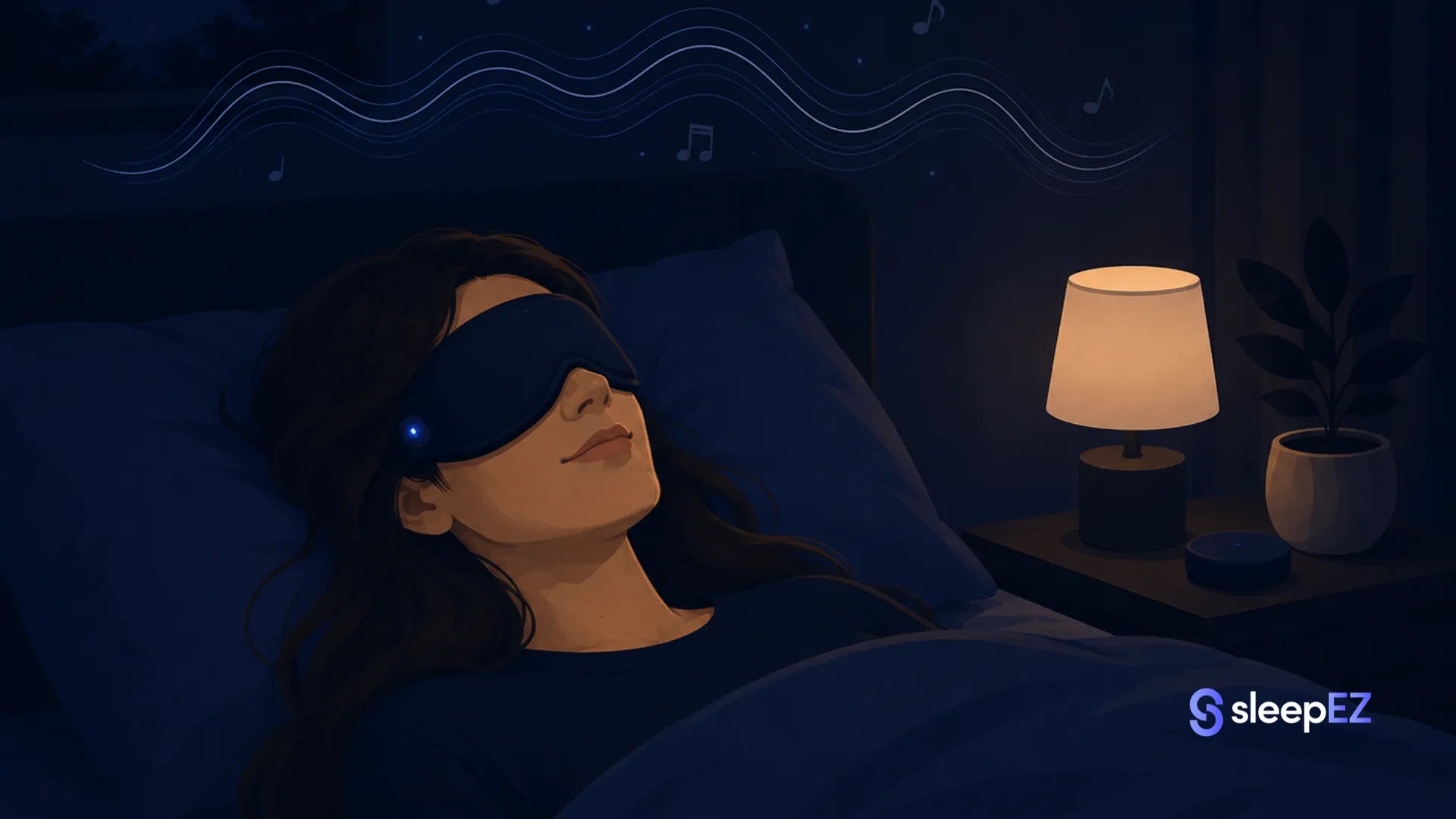
The Dreamy Sounds Bluetooth Sleep Mask was designed specifically for this. It delivers stereo audio through ultra-thin 4mm speakers built into the mask, so there's nothing pressing against your ear canal when you lie on your side.
It also blocks light completely, which supports melatonin production while you listen.
You can stream binaural beats from YouTube, Spotify, or any meditation app wirelessly. The 15+ hour battery means you won't run out mid-session.
Side Effects & Who Should Be Cautious
Most people can use binaural beats safely, but some should be careful or avoid them entirely.
Potential Side Effects:
- Headaches from volume too high or sessions too long
- Dizziness or nausea in sensitive individuals
- Irritability if used at wrong frequencies
- Hearing damage from excessive volume
Who Should Avoid Binaural Beats People with epilepsy or seizure disorders should not use binaural beats. The rhythmic audio patterns could potentially trigger seizures in susceptible individuals.
Those with pacemakers should consult their doctor before using binaural beats, as there's limited research on potential interactions.
Children under 12 should only use binaural beats under adult supervision, as their developing brains might respond differently to audio entrainment.
When to Stop Using Them Stop using binaural beats if you experience persistent headaches, increased anxiety, or sleep disruption. Some people find certain frequencies too stimulating rather than relaxing.
If you notice hearing changes or ear discomfort, reduce volume or take a break from binaural beats.
Conclusion
Binaural beats may help you fall asleep faster and sleep better. They work best with quality headphones, safe volume levels, and theta or delta frequencies. A Bluetooth sleep mask like the Dreamy Sounds Sleep Mask is perfect for this, combining comfortable audio delivery with complete light blocking.
Start with short 15-30 minute sessions and be patient. Results may take weeks of regular use. Binaural beats work best alongside good sleep habits, not as a cure-all. For serious sleep issues, see a healthcare provider.
Frequently Asked Questions
Do binaural beats really work for sleep?
Research shows mixed but promising results. Some studies found that binaural beats helped people fall asleep faster and report better sleep quality.
Others found no significant difference. They appear safe to try and may help some people, particularly those with pre-sleep anxiety or racing thoughts.
What binaural beat frequency is best for sleeping?
Theta (4–8 Hz) and delta (0.5–4 Hz) frequencies are most commonly recommended for sleep. Theta supports the transition into sleep, while delta is associated with deep, restorative sleep. Most people start with theta.
How long does it take for binaural beats to work?
In a single session, brainwave entrainment typically takes 15–30 minutes. Across regular use, many people notice a difference after 1–2 weeks.
Consistency matters more than any single session.
Can you listen to binaural beats all night?
You can, but it's not necessary. Most people find 60–90 minutes sufficient for sleep onset.
Using a sleep timer is recommended so audio doesn't play throughout the night.
Are binaural beats safe?
Yes, for most people. Those with epilepsy or seizure disorders should avoid them.
People with pacemakers should consult their doctor first. Keep volume at a comfortable level to protect your hearing.
Do binaural beats require headphones?
Yes. Binaural beats require stereo audio, one frequency delivered to each ear separately.
Regular speakers mix both frequencies, which eliminates the binaural effect. Earphones, earbuds, or a Bluetooth sleep mask with stereo speakers all work.
Can binaural beats replace white noise?
They serve different purposes. White noise masks environmental sounds.
Binaural beats aim to influence brainwave states. They can be used together, or separately depending on your sleep challenge.
Do binaural beats help with anxiety before bed?
Some research suggests binaural beats in the alpha and theta range may help reduce anxiety and promote relaxation. They're not a treatment for anxiety disorders, but may support a calming pre-sleep routine.


Leave a comment
This site is protected by hCaptcha and the hCaptcha Privacy Policy and Terms of Service apply.