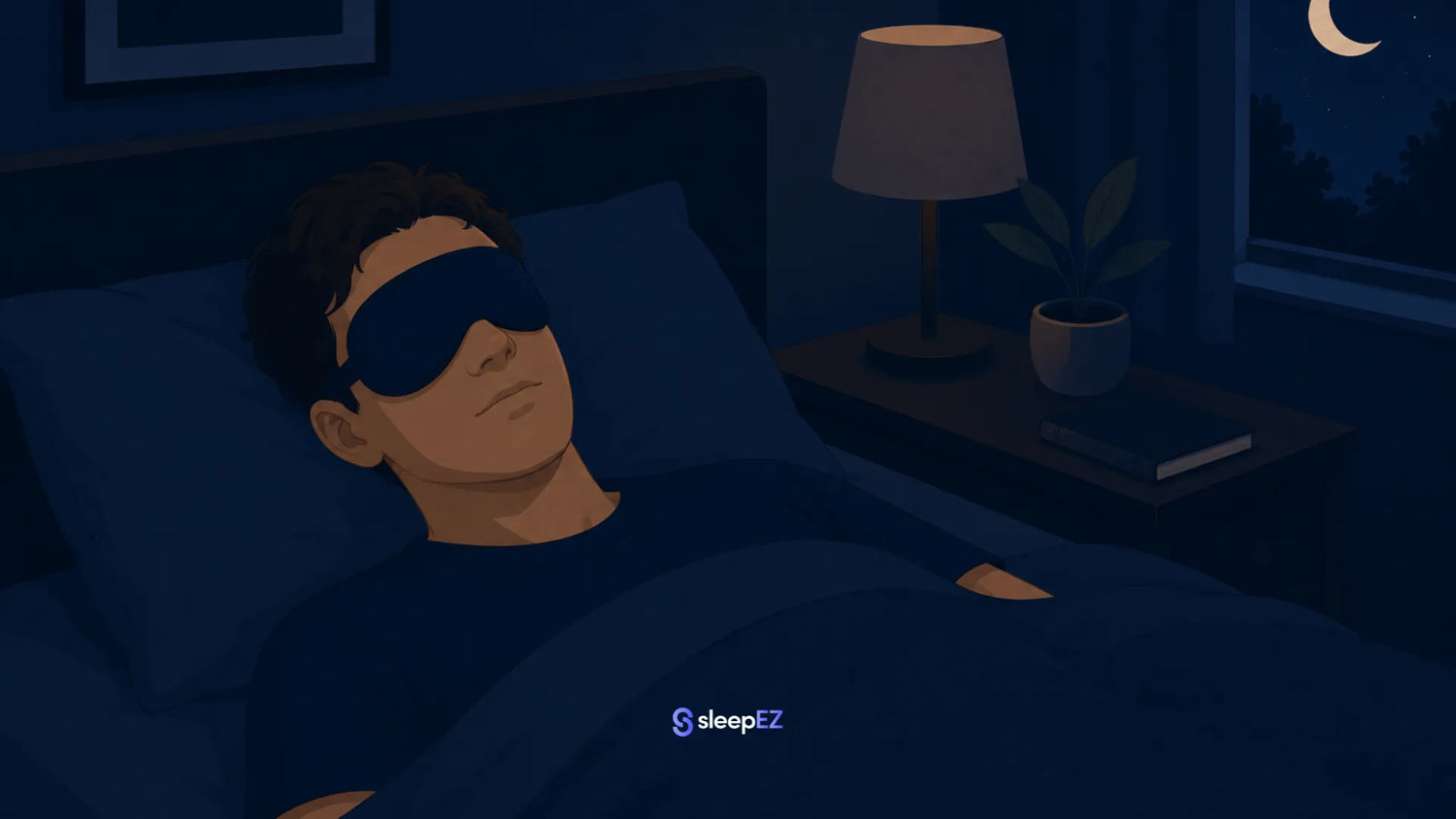
We get it you’ve done everything to improve your sleep. You’ve got blackout curtains, reduced your screen time, and still… the tiniest of light sneaks in and it literally throws off your bed.
Sound familiar? You’re not alone. For many Aussies and (our Kiwi Cousins), poor sleep and blue light exposure go hand in hand.
So, what’s the solution? A sleep mask? Yeah right… or actually, nah yeah, That could work.
Before you dismiss a sleep mask as another gimmick, let’s break down what science actually says.
Quick Answer: Do Sleep Masks Work?
Yes, but with an important nuance. Sleep masks are well-evidenced for blocking light and protecting melatonin production, which supports your circadian rhythm and sleep quality.
A 2023 Cardiff University study published in the journal Sleep found that wearing a sleep mask improved next-day alertness and learning performance.
However, the same study found no significant change in total sleep time or sleep architecture (including REM sleep). Sleep masks improve the conditions for sleep, particularly by blocking light, but they don't dramatically change how long or deeply you sleep in a quiet, already-dark room.
The short answer: Sleep masks work best for people sleeping in environments with uncontrolled light. The evidence for melatonin protection is strong; the evidence for more/deeper sleep is more limited.
The Role of Darkness in Sleep
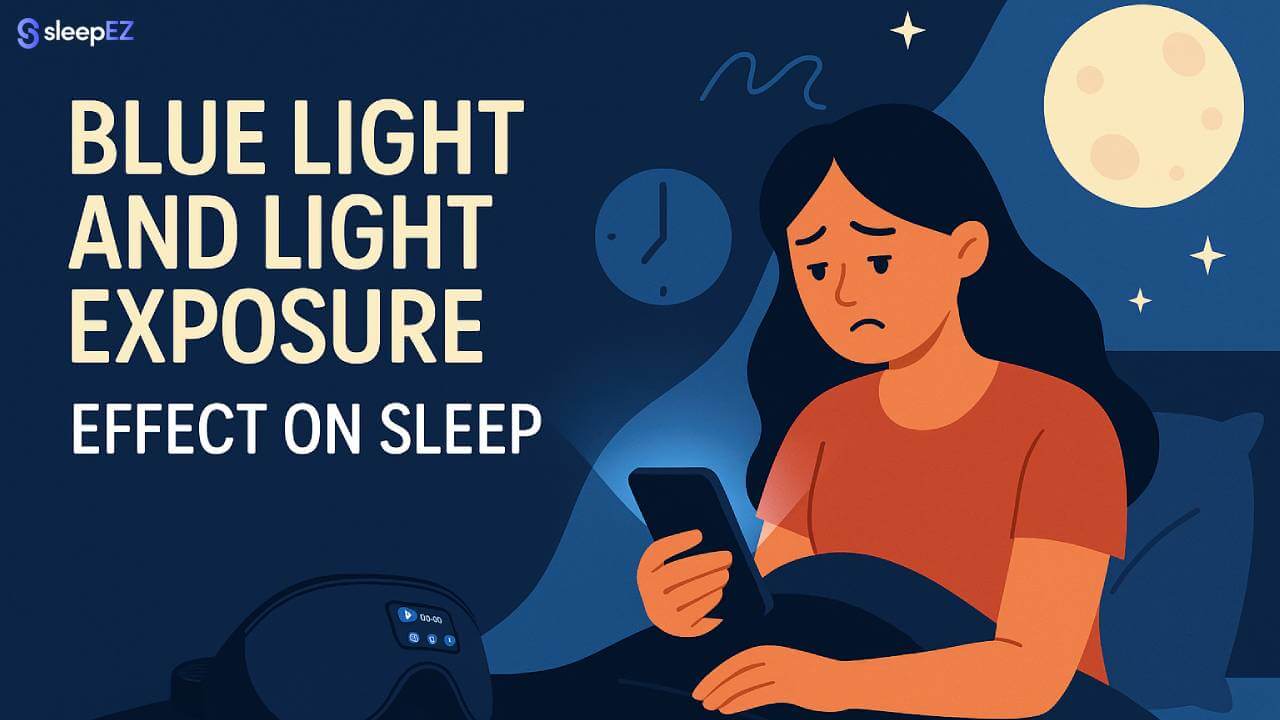
One of the biggest factors in good sleep is how light affects your circadian rhythm. When it gets dark, your body starts producing melatonin, a hormone that makes you feel sleepy.
But when you’re exposed to light (yes, even dim light), melatonin production drops, and your body thinks it’s still daytime.
As Gooley et al. found in the Journal of Clinical Endocrinology & Metabolism, “exposure to room light before bedtime suppresses melatonin onset and shortens melatonin duration in humans.
What the Science Actually Says
The Melatonin Evidence (Strong)
A landmark study by Gooley et al. (2011) found that exposure to room light before bedtime suppressed melatonin onset by approximately 90 minutes and reduced melatonin duration by about 50% compared to dim light. This is the foundational evidence for why blocking light matters, and it's robust.
Your body uses light as its primary circadian signal. Even moderate indoor light in the hour before bed can significantly delay melatonin release and push your sleep timing later. A sleep mask addresses this by creating complete darkness regardless of your environment.
The 2023 Cardiff University Study
The most recent and most cited study on sleep masks specifically was published in the journal Sleep in 2023 by researchers at Cardiff University. Here's what it actually found:
What it showed:
- Participants who wore sleep masks performed significantly better on a next-day learning task (paired-associate word test)
- They showed improved reaction times on a psychomotor vigilance test (a measure of alertness)
What it didn't show:
- No significant difference in total sleep time between mask and no-mask conditions
- No changes to sleep architecture, including REM sleep, as measured by a sleep-tracking headband
- No significant difference in self-reported sleep quality
What the Evidence Doesn't Show
The article you're reading has previously stated that sleep masks "increase REM sleep by up to 10%" and help you "fall asleep up to 15 minutes faster." These specific claims are not supported by the current evidence, and the Cardiff study directly contradicts the REM claim.
The honest, more interesting finding: Sleep masks' best-evidenced benefit isn't "more sleep", it's protecting melatonin and producing measurable next-day gains in alertness and learning. That's a genuinely useful outcome, and it's what the evidence actually supports.
And you know what? The numbers don’t lie…
By reducing light exposure before bedtime you could:
- Fall asleep up to 15 minutes faster
- Increase REM sleep by up to 10%
- Wake up fewer times during the night
A review in Frontiers in Public Health found sleep masks significantly improved sleep quality and reduced night-time wakefulness. Even low light during sleep has been shown to elevate stress hormone levels and reduce sleep efficiency.
How Sleep Masks Work: Light, Melatonin, and Your Body Clock
Your brain uses light as its primary signal for regulating your circadian rhythm, the internal clock that controls when you feel sleepy and when you feel alert.
When light enters your eyes, it suppresses melatonin production in the pineal gland. Even small amounts of light, from streetlamps, phone chargers, or a partner's screen, can delay melatonin onset and push your sleep timing later.
A sleep mask creates complete darkness regardless of your environment. This allows your melatonin to rise on its natural schedule, supporting sleep onset and circadian alignment.
The mechanism in one sentence: Sleep masks don't make you sleepy, they remove a major signal that tells your brain it's still daytime.
Who Benefits Most from a Sleep Mask?
Light Sleepers
Light sleepers are particularly sensitive to environmental changes. Even small amounts of light, early morning sun, a streetlamp, a partner's phone, can trigger waking.
A sleep mask removes this trigger entirely.
Shift Workers
People sleeping during the day face significant light exposure that conflicts with their sleep schedule. A sleep mask is one of the most effective tools for creating artificial darkness during daytime sleep.
See: Benefits of Using a Sleep Mask for Shift Workers.
Travellers and Jet Lag
Hotel rooms, aeroplanes, and unfamiliar environments have uncontrolled light. A sleep mask creates a consistent dark environment wherever you are.
See: Sleep Mask for Jet Lag.
Partners with Different Schedules
If your partner reads, uses their phone, or has a different bedtime, a sleep mask allows you to sleep in darkness without requiring them to change their habits.
Anyone in a Light-Polluted Environment
Urban environments, apartments with street-facing windows, and rooms without blackout curtains all benefit from a sleep mask as a portable, adjustable blackout solution.
Sleep masks can help just about anyone but for some of us, they’re a game-changer. Here’s who benefits most:
- Shift Workers: Whether you’re on the graveyard shift or early mornings, you’re doing the hard yards and you deserve real proper rest. Blocking out sunlight during the day helps boost melatonin and shuts out the distractions that keep you wide-awake when you’re meant to be winding down.
- Frequent Travelers: Jet lag, hotel lights, airport lounges... if you're constantly on the move, whether you're a pilot, entrepreneur, or travel vlogger, routine is so essential. A sleep mask brings blackout consistency wherever you land, helping your body catch up no matter which time zone you’ve dropped into.
- Light-Sensitive Sleepers: Not everyone can tune out that blinking charger or the glow of a streetlight. If even the slightest bit of light keeps you up, we see you and so does the sleep mask that blocks it all out.
- Bedroom Sharers & Dorm Dwellers: Partner scrolling TikTok? Roommate with a bedside lamp obsession? Flatmate who thinks 1am is a great time for laundry? A true blackout mask is your peacemaker, letting you sleep through the trenches like an actual pro.
Is It Just a Gimmick?
Nope. While it might seem too simple to be effective, the science says otherwise. Blocking out light helps your brain produce melatonin.
Do it nightly, and your mask becomes your body’s signal that it’s time to shut down.
Limitations: What Sleep Masks Won't Do
Being honest about limitations builds more trust than overclaiming, and it helps you choose the right tool for your actual problem.
Sleep masks won't:
- Significantly change how long you sleep in an already-dark room
- Dramatically increase REM sleep (the 2023 Cardiff study found no change in sleep architecture)
- Treat insomnia, sleep apnea, or other sleep disorders
- Replace good sleep hygiene practices
- Help if noise, not light, is your primary sleep disruptor
If noise is your main problem: Silicone earplugs or a white noise machine will be more effective than a sleep mask alone.
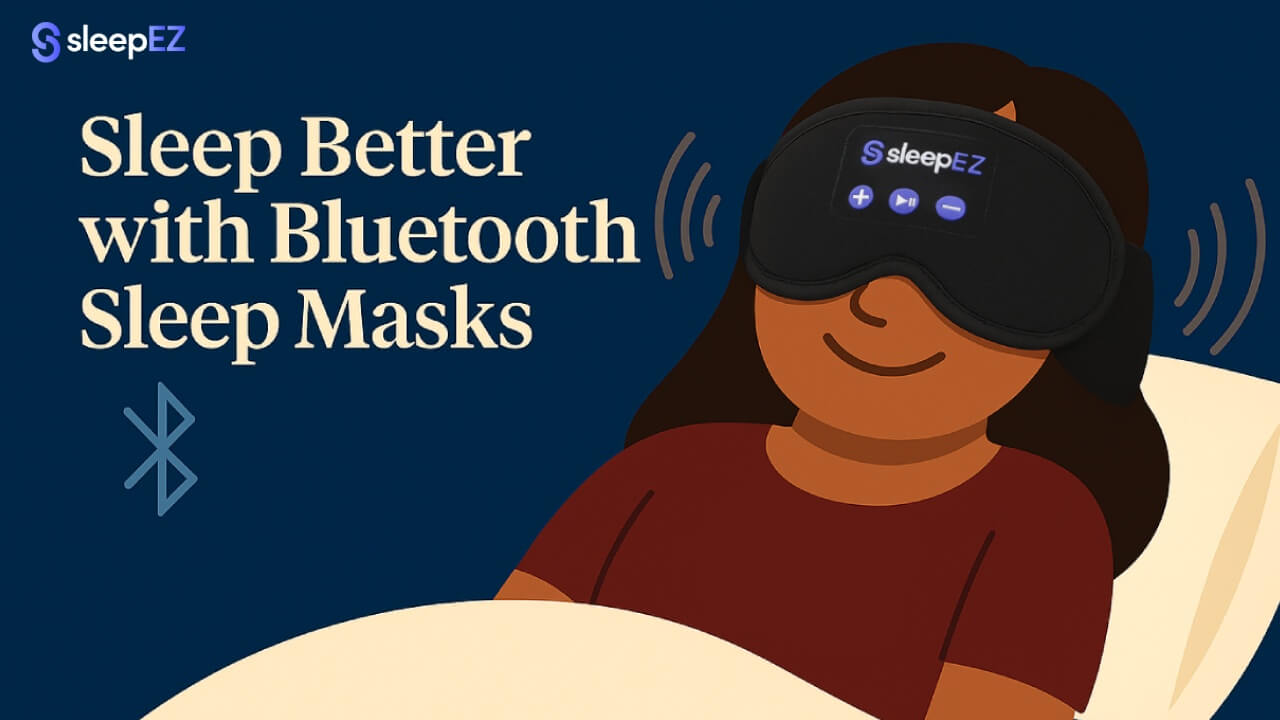
If both light and noise are problems: A Bluetooth sleep mask addresses both, blocking light and delivering audio (white noise, meditation, or sleep podcasts) through built-in speakers.
Not All Masks Are Equal
Fit, material, and shape matter. Cheap masks often let in light or leave marks on your face. The good ones? They do it right:
- Total blackout
- Large, pressure-free eye contours
- Soft, breathable memory foam, like a pillow for your eyes
Not sure what to pick? Check out our guide to find the best mask for your sleep style.
How to Choose a Sleep Mask That Actually Works
Not all sleep masks deliver on the promise. Here's what matters:
Complete blackout at the nose bridge.
This is where most masks fail, light enters around the nose even when the mask fits well elsewhere. Look for a contoured design with a fitted nose bridge.
No contact with the eyes.
Flat fabric masks press against the eyelids, which can be uncomfortable and may affect REM sleep (eye movement is restricted). Contoured or cupped designs allow eyes to move freely.
Stays in place when you move.
A mask that shifts during sleep is useless. Adjustable, non-slip straps matter.
Comfortable for your sleeping position.
Side sleepers need a low-profile design that doesn't create pressure when the head is on a pillow.
Additional features (optional but useful): Some masks, like the Dreamy Sounds Sleep Mask, include built-in Bluetooth speakers for streaming white noise, meditation, or sleep podcasts. This combines light blocking with audio support in one product.
Any Downsides?
A few things to note:
- Comfort issues: If you're new to sleep masks, it may take a night or two to get used to especially if you're a side sleeper.
- Skin irritation: Synthetic materials can bother sensitive skin, so always check the fabric if you have allergies.
- Adjustment period: It might feel odd at first to have something on your face.
- Limited scope: They block light not noise, temperature, or medical sleep issues.
Frequently Asked Questions
Do sleep masks really work?
Yes, for blocking light and protecting melatonin, the evidence is strong. A 2023 Cardiff University study also found improved next-day alertness and learning.
However, they don't significantly change total sleep time or sleep architecture in already-dark environments.
Do sleep masks increase REM sleep?
The 2023 Cardiff University study found no significant change in REM sleep or sleep architecture when participants wore sleep masks. The primary evidenced benefit is melatonin protection and next-day cognitive performance.
Are sleep masks good for you?
Yes, for most people. They're safe, non-invasive, and effective for blocking light.
They're particularly beneficial for light sleepers, shift workers, travellers, and anyone sleeping in a light-polluted environment.
Do sleep masks help you fall asleep faster?
They may, by protecting melatonin and removing a wake signal (light). The evidence for a specific time reduction is limited, but many people report finding it easier to fall asleep with a mask.
Can sleep masks cause wrinkles?
See our dedicated article: Do Sleep Masks Cause Wrinkles?
Are Bluetooth sleep masks safe?
Yes. Bluetooth sleep masks use low-energy wireless technology.
Current evidence has not identified known health risks from normal Bluetooth use at these power levels. See: Is It Safe to Sleep with Bluetooth?
What is the best sleep mask?
See our full guide: Sleep Masks: The Complete Guide.
The Bottom Line
Yes, sleep masks work. And science agrees. By blocking light and supporting melatonin, they help you fall asleep faster, stay asleep longer, and wake up feeling more refreshed.
They’re simple, low-cost, and often surprisingly effective.
Why We Made the Dreamy Sounds Sleep Mask
We took it a step further. The Dreamy Sounds Sleep Mask gives you total blackout and built-in sound white noise, meditation, audiobooks, music and yes of course youtube. It’s not just a mask, it’s your personalised dream machine.
Mask on. Sound on. Drift off.

Leave a comment
This site is protected by hCaptcha and the hCaptcha Privacy Policy and Terms of Service apply.