Not all insomnia is the same. If you wake up at 3 AM every night, you need a different fix than someone who stares at the ceiling for hours before falling asleep. Treating every sleep problem the same way is why most solutions fail.
This guide helps you identify your specific insomnia pattern. Once you know what type you have, you can stop guessing and start fixing the root cause.
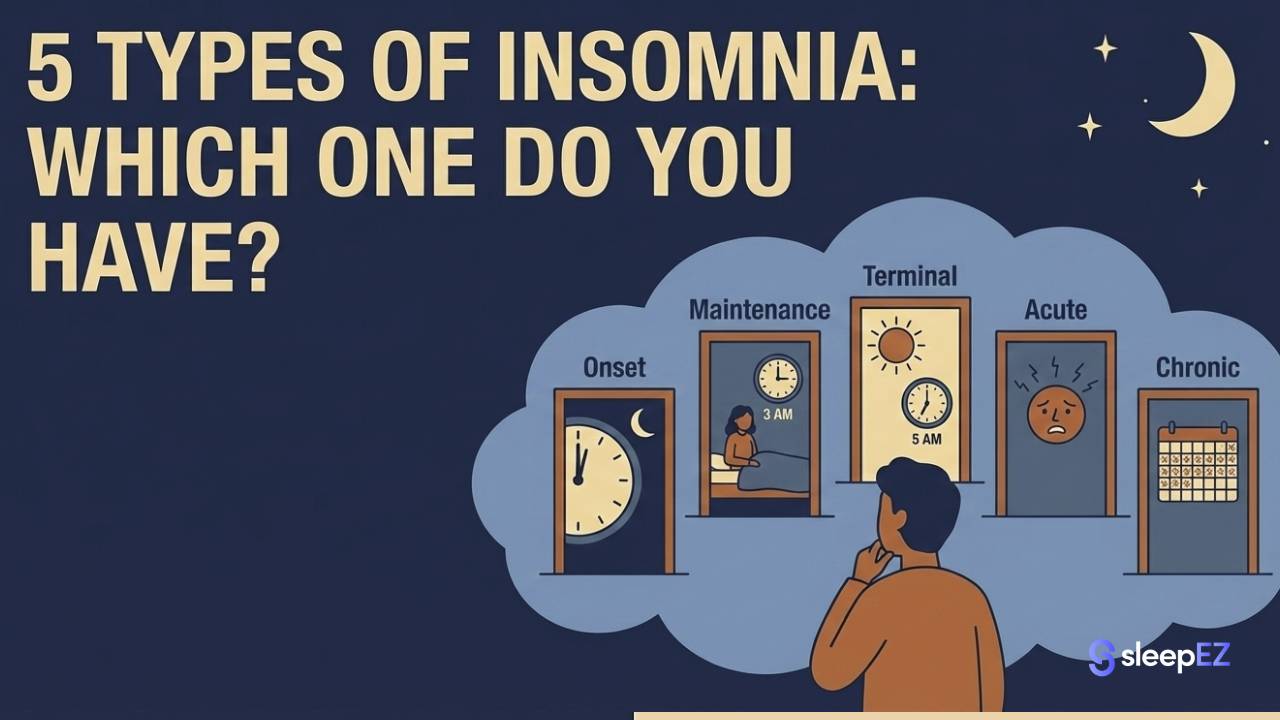
Type 1: Sleep Onset Insomnia (The "Racing Mind")
You lie in bed for 30 minutes or longer before falling asleep. Your mind races with thoughts about tomorrow's meeting, that awkward conversation, or your endless to-do list. You feel tired but your brain won't shut off.
Common causes: Anxiety, too much light in your room, racing thoughts, or a state called hyperarousal where your nervous system stays too active.
The fix: Your brain needs less input, not more. A blackout sleep mask blocks all visual signals that keep your brain alert. Complete darkness triggers your body to produce melatonin naturally. A sound machine adds a neutral audio layer that gives your racing mind something to focus on besides your own thoughts.
Type 2: Sleep Maintenance Insomnia (The "2 AM Wake Up")
You fall asleep just fine. Then you wake up at 2 or 3 AM and can't get back to sleep for 20 minutes or longer. Sometimes you're awake for hours. This pattern is exhausting because you never get deep, unbroken rest.
Common causes: Sudden noises like traffic or a snoring partner, room temperature changes, or breathing issues you might not even notice.
The fix: Your sleep environment is too reactive. Earplugs smooth out the sudden noise spikes that jerk you awake. They don't block all sound, but they prevent those jarring interruptions.
Check for dry mouth when you wake up. Mouth breathing during sleep is a hidden cause of middle-of-the-night awakenings. Mouth tape keeps your mouth closed so you breathe through your nose, which maintains better oxygen flow and moisture levels.
Type 3: Early Morning Awakening (Terminal Insomnia)
You wake up at 4 or 5 AM and cannot fall back asleep, even though you're still tired. You want to sleep longer but your body refuses. This leaves you drained all day because you're missing your final sleep cycles.
Common causes: Depression, natural aging processes, or circadian rhythm changes. A study by Harvard Medical School researchers shows that morning light exposure directly affects your internal clock and causes your body to wake earlier.
The fix: Light is probably triggering your early wake-up. Even small amounts of dawn light seeping through your curtains signal your brain that it's time to start the day. A contoured sleep mask blocks all light and keeps your room pitch black through sunrise. This prevents the premature wake-up signal.
Type 4: Acute (Short-Term) Insomnia
This type lasts less than three months. It usually shows up when life gets stressful. You might lose sleep during a work deadline, after a breakup, or when dealing with family issues. Your sleep was fine before, and it will probably be fine again once things settle down.
Common causes: Job stress, relationship problems, travel, illness, or major life changes like moving or losing a loved one.
The fix: Acute insomnia often resolves on its own once the stressor passes. In the meantime, a sound machine can help mask temporary noise disruptions and create a calming sleep environment. You don't need to retrain your brain because this isn't a learned pattern yet.
Type 5: Chronic (Long-Term) Insomnia
Chronic insomnia, according to medical research, means you have trouble sleeping three or more nights per week for over three months. This isn't just a bad week. Your brain has learned a pattern of poor sleep, and it won't go away without intervention.
Common causes: Learned associations between bed and wakefulness, ongoing stress, mental health conditions, or physical problems like chronic pain.
The fix: A study by University of Pennsylvania researchers shows that cognitive behavioral therapy for insomnia (CBT-I) works as well as sleep medication but without side effects or relapses. You need to retrain your brain's sleep habits through structured techniques. This might include sleep restriction, stimulus control, and changing the thoughts that keep you awake.
Understanding Primary vs. Secondary Insomnia
Doctors also classify insomnia by what's causing it.
Primary Insomnia: Your sleeplessness is the main problem. It's not caused by another medical condition, medication, or mental health issue. The insomnia itself is the disease.
Secondary Insomnia: Your sleep problems are a symptom of something else. Common causes include chronic pain, depression, asthma, arthritis, or medications that interfere with sleep. Treating the underlying condition often improves the insomnia.
Mixed Insomnia: You have trouble both falling asleep and staying asleep. This combination is very common. Many people experience both onset and maintenance issues at different times or even on the same night.
Summary Table: Which Type Am I?
| Type | The Feeling | Likely Trigger | Helpful Tool |
|---|---|---|---|
| Type 1: Onset | "I stare at the ceiling." | Anxiety / Light | Sleep Mask / Sound Machine |
| Type 2: Maintenance | "I wake up at 2 AM." | Noise / Airway | Earplugs / Mouth Tape |
| Type 3: Terminal | "I wake up at 4 AM." | Sunlight / Rhythm | Sleep Mask |
| Type 4: Acute | "I'm stressed this week." | Life Event | Sound Machine |
| Type 5: Chronic | "This has gone on for months." | Learned Pattern | CBT-I Therapy |
The Bottom Line
You can't fix early morning awakening with the same tools you use for onset insomnia. Diagnosis starts with naming the problem correctly.
Look at the five types above and identify which one matches your experience. Then choose the specific tool designed to counter that exact issue. A sleep mask works for light-triggered problems. Earplugs handle noise disruptions. Mouth tape addresses airway issues. For chronic insomnia lasting months, you need professional help with CBT-I.
Stop treating all insomnia the same way. Match your solution to your specific pattern, and you'll see results tonight.

Leave a comment
This site is protected by hCaptcha and the hCaptcha Privacy Policy and Terms of Service apply.