
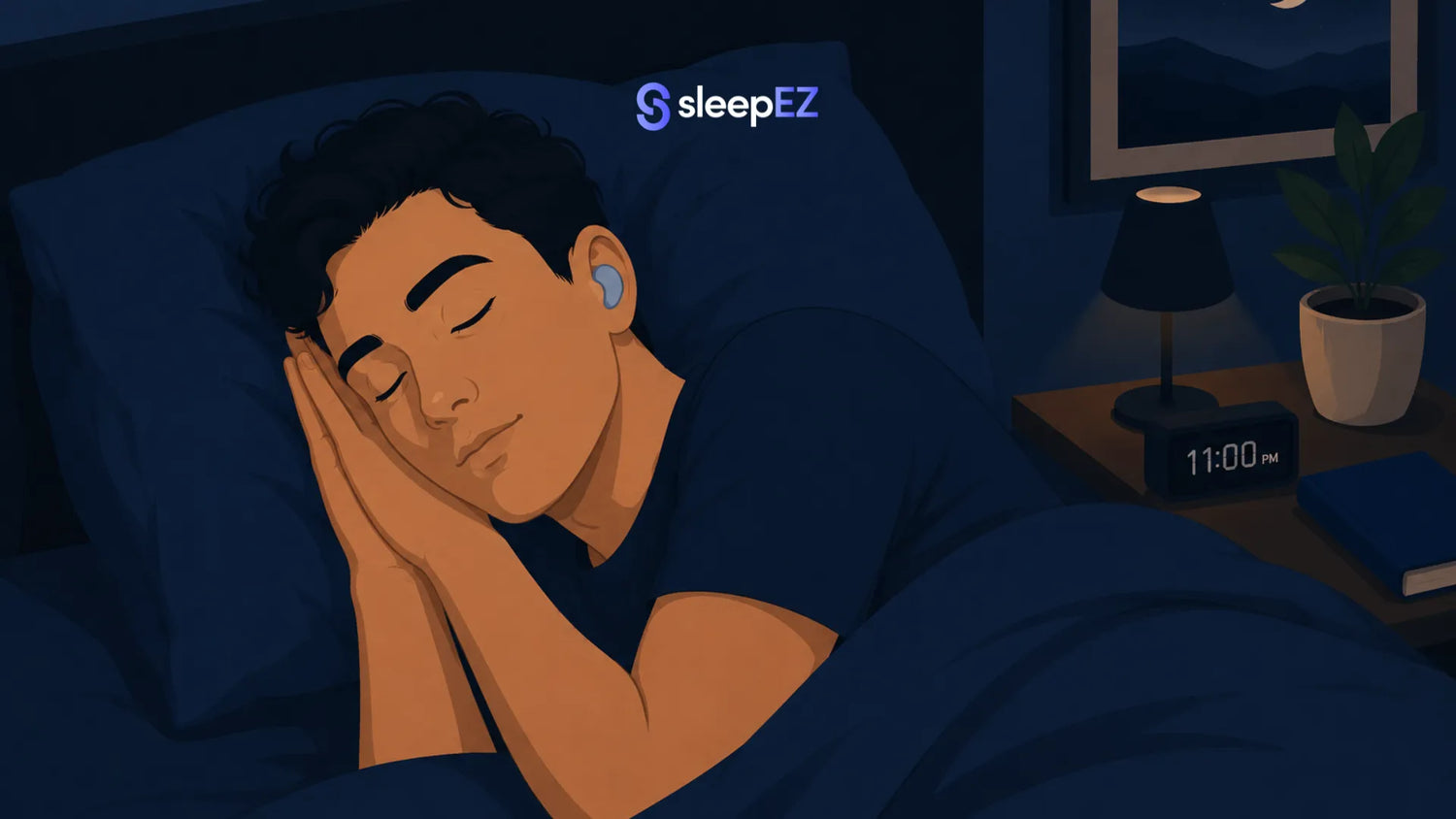
If you have small ears, you know the struggle. Most earplugs feel like they were made for someone else.
They cause painful pressure inside your ear canal, or they fall out the moment you turn over in bed. Finding something that's both comfortable and effective feels impossible.
The problem is simple: most foam or flanged earplugs follow a one-size-fits-all approach. That's exactly why they fail for people with smaller or uniquely shaped ear canals.
This guide breaks down what makes an earplug perfect for small ears. We'll show you the solution that finally delivers a quiet, comfortable night's sleep.
Quick Answer: What Are the Best Earplugs for Small Ears?
Mouldable silicone earplugs are generally the best option for small ears. Unlike foam earplugs (which require compression and deep insertion) or flanged silicone earplugs (which come in fixed sizes), mouldable silicone conforms to the exact shape of your ear canal, regardless of how small or narrow it is.
Key features to look for:
- Mouldable or moldable silicone design
- No insertion required, sits at the ear canal entrance
- Soft, comfortable for side sleeping
- Reusable and washable
Do You Actually Have Small Ear Canals?
Many people assume their ears are "normal" until they try earplugs. Signs that you may have smaller-than-average ear canals include:
- ✅ Earbuds constantly fall out, even with the smallest tip
- ✅ Standard earplugs cause pain or soreness after 30–60 minutes
- ✅ Foam earplugs create significant pressure when inserted
- ✅ Earphones never seem to fit properly regardless of brand
- ✅ You've tried multiple earplug brands and none feel comfortable
- ✅ Earplugs fall out during sleep
If several of these apply, you likely have smaller ear canals, and standard earplugs are simply not designed for you.
Why Standard Earplugs Don't Work for Small Ears
Standard earplugs are designed around an average ear canal size. For people with smaller canals, this creates several problems:
Foam earplugs require deep insertion.
To work effectively, foam earplugs must be compressed and inserted deep into the ear canal. In a small ear canal, this creates significant pressure and pain, often within 30–60 minutes.
Flanged earplugs come in fixed sizes.
Even "small" flanged earplugs may be too large for some ear canals, creating pressure points and discomfort.
Pressure causes pain.
When an earplug is too large for the canal, it presses against the canal walls. This pressure worsens over time and can cause soreness, headaches, and irritation.
They fall out.
Earplugs that don't fit properly don't seal effectively, they fall out during sleep, defeating the purpose.
The Problem with Traditional Earplugs for Small Ears
Understanding why standard earplugs fail is the first step to finding what actually works. The issues aren't random.
They stem from fundamental design choices that ignore how small ear canals actually function. Here are the three main problems you've probably experienced.
The Pressure and Pain of In-Canal Plugs
Foam and flanged earplugs work by expanding inside your ear canal. They create a seal by pushing against the canal walls. For people with small ear canals, this creates painful pressure points.
What should feel comfortable becomes a source of constant discomfort.
The pain gets worse the longer you wear them. Many people wake up with sore ears after just a few hours.
The "Falling Out" Dilemma
A shallow or small ear canal prevents these plugs from getting a secure anchor. There's simply not enough depth for them to grip.
You insert them carefully, lie down, and within minutes they've worked themselves loose.
Side sleepers have it worse. The pressure from your pillow pushes against the earplug, forcing it out even faster.
Ineffective Noise Blocking
A poor fit means a poor seal. That seal is what blocks sound.
When your earplugs don't fit properly, they let in the very noises you're trying to escape: snoring, traffic, loud neighbors, early morning sounds.
You're left lying awake, frustrated by both the discomfort and the noise.
Read: The Best Ear Plugs for Sleeping (2026)
Types of Earplugs for Small Ears
Foam Earplugs
Pros: Cheap, widely available, high noise reduction
Cons: Require deep insertion, cause significant pressure in small ear canals, not reusable, cannot be washed
Verdict for small ears: ❌ Not recommended
Flanged Silicone Earplugs
Pros: Reusable, washable, multiple sizes available
Cons: Fixed size, even "small" options may be too large, still require some insertion
Verdict for small ears: ⚠️ May work if you find the right size
Mouldable Silicone Earplugs
Pros: Custom fit to any ear shape, no insertion required, sit at the canal entrance, comfortable for side sleepers, reusable
Cons: Takes a few uses to master the application technique
Verdict for small ears: ✅ Best option for most people with small ears
Earplug Comparison for Small Ears
| Feature | Foam | Flanged Silicone | Mouldable Silicone |
|---|---|---|---|
| Small ear friendly | ❌ | ⚠️ | ✅ |
| Side sleeper friendly | ❌ | ⚠️ | ✅ |
| Requires insertion | ✅ Deep | ✅ Moderate | ❌ None |
| Reusable | ❌ | ✅ | ✅ |
| Custom fit | ❌ | ❌ | ✅ |
| Washable | ❌ | ✅ | ✅ |
| Comfortable all night | ❌ | ⚠️ |
✅ |
Key Criteria for the Best Earplugs
So what actually works for small ears? After looking at dozens of options and understanding why traditional earplugs fail, three key features stand out.
Any earplug claiming to work for small ears must meet all three criteria. Miss even one, and you're back to the same problems.
Criterion #1: A Truly Custom Fit
The only way to guarantee a fit for a small ear is to use a material that molds perfectly to its unique shape.
Moldable silicone is the ideal material. Instead of forcing something into your ear canal, moldable silicone creates a gentle seal over the ear canal opening, not inside it.
This means zero pressure. The earplug adapts to you, rather than forcing your ear to adapt to it.
Criterion #2: Comfort for All-Night Wear (Especially for Side Sleepers)
The best earplugs shouldn't have any hard components that stick out. They need to be soft and low-profile, sitting flush with your ear.
When you sleep on your side, there's nothing to get pushed or cause pain.
Traditional earplugs have stems or flanges that protrude. These become pressure points against your pillow.
Criterion #3: Hygienic and Reusable
Non-porous materials like silicone are easy to clean and can be reused multiple times. This makes them both hygienic and cost-effective.
You're not constantly throwing away foam plugs that lose their shape after one use.
A good pair of moldable silicone earplugs lasts for multiple uses when cared for properly.
Best Earplugs for Side Sleepers with Small Ears
Side sleeping creates an additional challenge for earplug users, when your head is on a pillow, any earplug that protrudes from the ear canal creates a pressure point.
What to look for:
- Flush or low-profile design, sits at or below the ear canal entrance
- Soft, mouldable material, compresses slightly under pillow pressure without causing pain
- No protruding stem, flanged earplugs with a stem can press painfully against the outer ear
Mouldable silicone earplugs like QuietBuds are particularly well-suited to side sleepers with small ears because they create a seal at the entrance of the ear canal without any protruding components.
Best Earplugs for Small Ears
After looking at what truly works for small and sensitive ears, one product stands out for its unique design and exceptional comfort: QuietBuds by SleepEZ.
A Perfect, Gentle Seal with Moldable Silicone
These earplugs are made from premium, soft moldable silicone. You don't force them into your canal.
Instead, you warm them in your hands and they create a custom-shaped cover over your ear canal opening.
This guarantees a perfect fit every single time, with zero pressure. The silicone conforms to your exact ear shape.
Small canal? No problem.
Unique contours? The material adapts.
Finally, Comfort for Side Sleepers
Because they form a seal on the outer ear, they sit flush. They won't get in the way when you sleep on your side.
No more painful pushing sensation when your ear meets the pillow.
You can shift positions freely throughout the night without thinking about your earplugs.
Create Your Own Bubble of Silence
The custom seal is incredibly effective at blocking out disruptive noises. Snoring, loud neighbors, and city sounds all fade away.
This allows you to achieve deeper, more restorative sleep.
The seal works because it's custom to your ear. Unlike standard earplugs that leave gaps, this design creates complete coverage.
Reusable, Waterproof, and Travel-Ready
They're reusable and easy to clean, coming in a convenient carry case that makes them perfect for home or travel. The waterproof silicone means you can even use them for swimming or showering if needed.
One pair goes a long way, saving you money compared to disposable foam plugs.
How to Know If Your Earplugs Are Too Big
| Symptom | What It Means |
|---|---|
| Pain within 30–60 minutes | Earplug is too large for your canal |
| Soreness after removal | Excessive pressure during wear |
| Earplugs fall out during sleep | Poor seal, wrong size or type |
| Headache after overnight use | Sustained pressure on canal walls |
| Itching inside the ear | Pressure and friction irritation |
| Reduced noise blocking | Earplugs aren't sealing properly |
If you experience any of these consistently, your earplugs are the wrong size or type for your ears.
Common Buying Mistakes When Buying Earplugs for Small Ears
Buying based on NRR/SNR rating alone.
A high noise reduction rating is useless if the earplug doesn't fit. Comfort and fit come first.
Choosing foam by default.
Foam is the most widely available earplug type, but it's the worst option for small ears. Don't default to it just because it's familiar.
Ignoring sleeping position.
Side sleepers need a flush, low-profile design. A protruding earplug will cause pain when your head is on a pillow.
Pushing earplugs too deeply.
More insertion doesn't mean better noise blocking, it means more pain. Mouldable silicone works at the canal entrance.
Giving up after one brand.
If one type doesn't work, try a different material. Foam and mouldable silicone are fundamentally different experiences.
How to Get a Perfect Fit with Your QuietBuds (Step-by-Step Guide)
If you've never used moldable silicone earplugs before, the process might seem unfamiliar at first. But it's actually simpler than inserting traditional foam plugs.
There's no twisting, pushing, or waiting for expansion. The key is understanding that these earplugs work differently.
They seal over your ear canal, not inside it. Once you get the technique down, it takes less than 30 seconds per ear. Here's how to do it:
Step 1: Start with Clean Hands Wash and dry your hands thoroughly. This keeps your earplugs clean and hygienic.
Step 2: Warm and Roll Take one earplug and roll it into a ball between your palms. The warmth from your hands makes the silicone more pliable.
Step 3: Place and Flatten Place the ball over your clean and dry ear canal opening. Important: Do not push it inside the canal. It should sit over the opening, not in it.
Step 4: Create the Seal Gently flatten the silicone until it forms a secure and comfortable seal, covering the outer ear. Press lightly around the edges to ensure full contact.
The entire process takes less than 30 seconds per ear. After a couple of uses, it becomes second nature.
When to Consider Custom-Moulded Earplugs
Custom-moulded earplugs are made from impressions of your specific ear canal. They offer a perfect fit regardless of ear size or shape.
Consider custom earplugs if:
- Every standard earplug causes pain regardless of type or size
- You have unusually shaped or very narrow ear canals
- You have chronic ear problems that make standard earplugs unsuitable
- You need earplugs for professional use (musicians, construction workers)
The cost consideration: Custom earplugs typically cost $150–$400+ from an audiologist. For most people with small ears, high-quality mouldable silicone earplugs provide a similar experience at a fraction of the cost.
Frequently Asked Questions
Why do most earplugs hurt my ears?
Standard earplugs are designed for average ear canal sizes. If your canals are smaller than average, foam and flanged earplugs create pressure and pain.
Mouldable silicone earplugs that sit at the canal entrance rather than inside it are usually much more comfortable.
Are there earplugs specifically for small ears?
Yes. Mouldable silicone earplugs are the most adaptable option, they conform to any ear shape and size without requiring insertion.
Some brands also offer "small" or "petite" sized flanged earplugs.
What are the best earplugs for side sleepers with small ears?
Mouldable silicone earplugs with a flush, low-profile design. They sit at the canal entrance without protruding, so there's no pressure point when your head is on a pillow.
Are mouldable silicone earplugs better than foam for small ears?
Yes, for most people with small ears. Foam requires deep insertion and creates pressure in narrow canals.
Mouldable silicone sits at the entrance and conforms to your exact shape.
Why do my earplugs keep falling out?
Earplugs that are too large for your ear canal don't seal properly and fall out during sleep. Mouldable silicone that you shape to your specific ear is less likely to fall out because it's custom-fitted each time.
How do I know if my ear canal is small?
Signs include earbuds constantly falling out, pain from standard earplugs within 30–60 minutes, and earplugs that never seem to seal properly regardless of brand.
Are custom earplugs worth it for small ears?
For most people, high-quality mouldable silicone earplugs provide a similar experience at a fraction of the cost. Custom earplugs are worth considering if every standard option causes pain despite trying different types.
Are moldable silicone earplugs truly better for small ears?
Yes. They are the ideal solution because they don't rely on pressure inside the ear canal.
They adapt to your unique shape, eliminating pain and ensuring a secure fit. Traditional earplugs force your ear to accommodate them. Moldable silicone does the opposite.
Can I really sleep on my side with QuietBuds?
Absolutely. They are designed with a low profile for this purpose.
The silicone sits flush with your ear, so there's nothing to press uncomfortably against your pillow. Side sleepers consistently report this as the biggest comfort improvement.
How do I clean and store my QuietBuds?
Gently wash them with warm, soapy water and let them air dry completely. Store them in their provided case to keep them clean and ready for use.
Clean earplugs last longer and stay more effective.
How many times can I reuse a pair of QuietBuds?
Each pair can be reused until it loses its stickiness or becomes dirty. With proper care, you can expect 5-7 uses or more per pair.
Some users get even longer life by cleaning them after each use.
Will they block out all noise?
QuietBuds significantly reduce noise levels, especially disruptive sounds like snoring and traffic. They won't create complete silence, but they lower ambient noise to a level where you can sleep peacefully.
You'll still hear important sounds like alarms.
Stop Compromising on Comfort and Quiet
You no longer have to choose between comfort and silence. For those with small ears, the solution isn't to find a smaller earplug, but a smarter one.
SleepEZ QuietBuds solve the core problems of fit, pressure, and comfort by using a moldable design that works with your body, not against it. No more waking up with sore ears.
No more earplugs that fall out. No more sleepless nights because nothing fits right.


Leave a comment
This site is protected by hCaptcha and the hCaptcha Privacy Policy and Terms of Service apply.