
If you're a light sleeper who lies awake at night with a racing mind, you might be a Dolphin chronotype - the most sleep-challenged of all chronotypes.
This comprehensive guide will help you identify if you're a Dolphin and provide science-backed strategies to finally get the rest you need.
To understand how your chronotype fits with the others, read our main Guide to Sleep Chronotypes.
Quick Answer: What Is the Dolphin Chronotype?
The Dolphin Chronotype is the rarest sleep type, representing approximately 10% of the population. Dolphins are light sleepers with irregular sleep patterns, a tendency toward perfectionism and anxiety, and a sleep schedule that doesn't fit neatly into early or late categories.
Key Dolphin traits:
- Wake time: 6:00–7:30 AM (often before they're ready)
- Bedtime: 11:00 PM–12:00 AM (difficulty falling asleep)
- Peak productivity: 10:00 AM–2:00 PM
- Biggest challenge: Falling asleep and staying asleep
- Population: ~10%
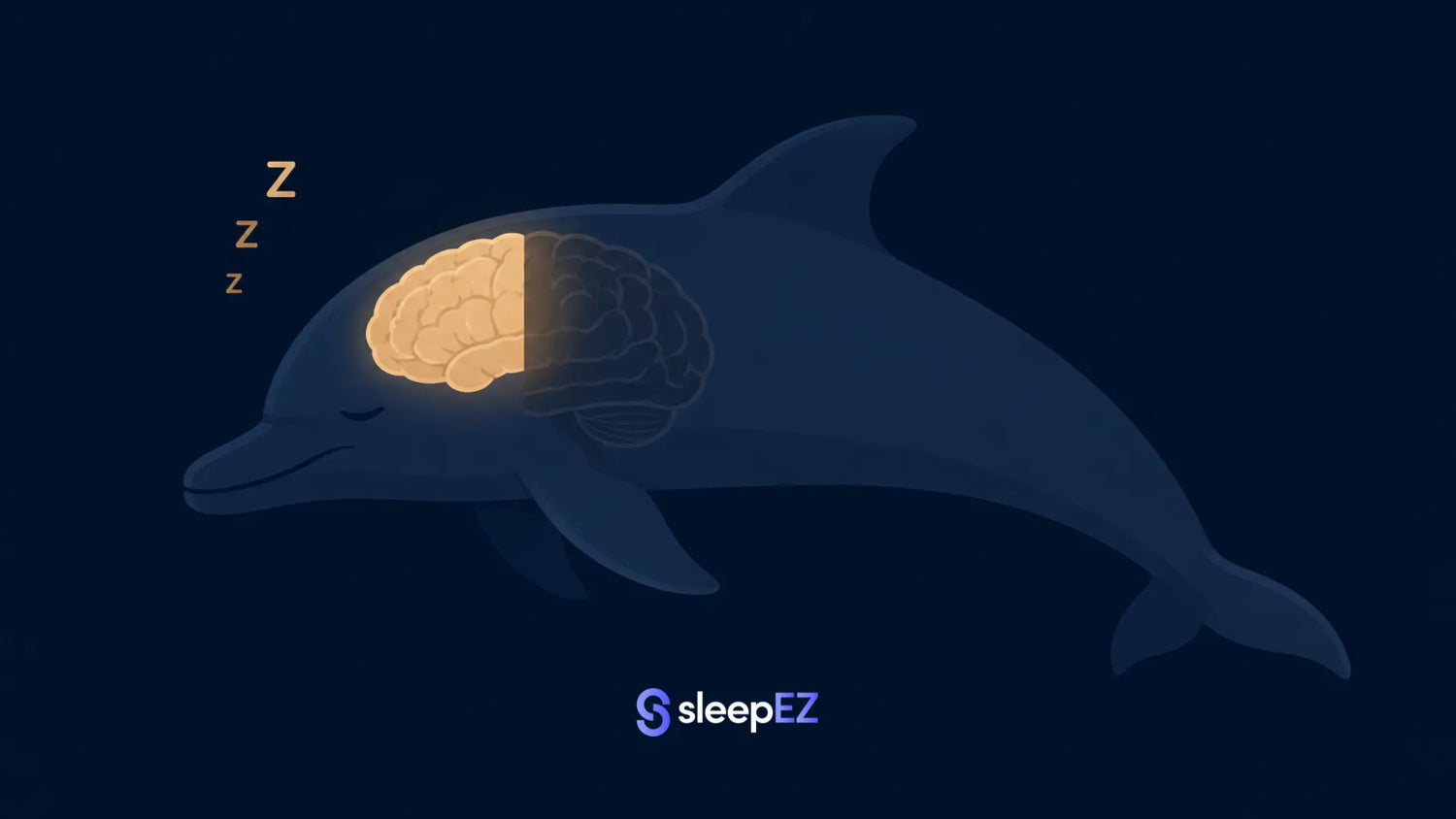
Dolphins are named after the marine mammal, which sleeps with one brain hemisphere at a time, always partially alert.
Dolphin Chronotype at a Glance
| Trait | Dolphin Chronotype |
|---|---|
| Wake Time | 6:00–7:30 AM (often unrefreshed) |
| Bedtime | 11:00 PM–12:00 AM |
| Peak Productivity | 10:00 AM–2:00 PM |
| Sleep Quality | Light, fragmented |
| Personality | Perfectionist, anxious, intelligent, detail-oriented |
| Biggest Challenge | Falling asleep and staying asleep |
| Population | ~10% (rarest chronotype) |
| Best Matched With | Bear |
What is a Dolphin Chronotype?
The Dolphin chronotype was identified by Dr. Michael Breus, a renowned sleep specialist, as part of his four-chronotype system (Bear, Lion, Wolf, and Dolphin).
Unlike other chronotypes, Dolphins represent about 10% of the population and face the most significant sleep challenges.
The Real Dolphin Connection
Real dolphins never fully sleep - they use unihemispheric slow-wave sleep, keeping half their brain awake to watch for danger.
Human Dolphins share this restless nature: your brain maintains a state of high alert even when exhausted, creating chronic light sleep patterns and making deep, restorative rest difficult to achieve.
Why Dolphin Chronotypes Struggle with Sleep
Recent research on chronotypes and sleep disorders shows that Dolphins have:
- Higher baseline cortisol levels at bedtime
- Increased brain activity during typical sleep hours
- Heightened physiological arousal when trying to wind down
- Greater sensitivity to environmental sleep disruptors
This isn't insomnia in the traditional sense, it's a biological chronotype that requires specific management strategies.
Dolphin Chronotype Test: Are You a Dolphin?
You may be a Dolphin if you consistently experience the following:
- ✅ You struggle to fall asleep even when you're tired
- ✅ You wake easily from small sounds or movements
- ✅ You rarely feel fully rested, even after a full night's sleep
- ✅ You tend to overthink and have racing thoughts at bedtime
- ✅ You're highly sensitive to your sleep environment, noise, light, temperature
- ✅ You're a perfectionist who notices details others miss
- ✅ You feel most alert mid-morning to early afternoon
- ✅ You struggle with consistent sleep timing, some nights are better than others
- ✅ You've tried many sleep solutions with limited success
If most of these describe you, you're likely a Dolphin. This is the rarest chronotype, and the one that benefits most from a carefully optimised sleep environment.
The clearest sign you're a Dolphin is how you sleep. You lie in bed, exhausted but alert.
Your mind won't stop running through tomorrow's tasks or replaying today's conversations. When you finally drift off, the smallest sound jolts you awake.
You spend more time trying to sleep than actually sleeping.
Research shows that individual differences in light sensitivity significantly affect sleep and circadian rhythms. Some people are naturally more sensitive to environmental factors that disrupt sleep.
Your mornings tell another story. While others hop out of bed ready to tackle the day, you feel like you're swimming through fog.
It takes hours to feel fully awake, even after a full night in bed. Coffee helps, but too much makes you jittery instead of energized.
Here's what sets Dolphins apart from other chronotypes:
Sleep challenges: Takes 30+ minutes to fall asleep, wakes up 2-3 times per night, sensitive to light and noise, rarely feels rested upon waking, lies awake worrying about sleep quality.
Energy patterns: Groggy mornings that improve by 10 AM, peak focus from 10 AM to noon, afternoon energy crash, slight evening boost around 6 PM, tired but wired at bedtime.
Mental traits: Perfectionist tendencies, notices details others miss, tends to overthink decisions, worries about future problems, prefers working alone on complex tasks, highly intuitive about people and situations.
Physical signs: Runs cold, lower appetite especially in mornings, sensitive to caffeine and stimulants, naturally lean build, lower resting body temperature.
Most people have some of these traits occasionally. Dolphins experience most of them consistently.
If you're reading this and thinking "finally, someone gets it," you're probably a Dolphin.
Dolphin Chronotype Personality Traits
Strengths
- Highly analytical, Dolphins notice details and patterns that others miss
- Creative problem-solving, their partially alert brain often generates novel solutions
- Perfectionist, high standards produce high-quality work
- Observant and intuitive, sensitive to their environment in ways that can be an asset
- Intelligent, Dolphins often score highly on measures of intelligence and creativity
- Conscientious, reliable and thorough in their work
Challenges
- Insomnia tendencies, difficulty falling and staying asleep is their defining challenge
- Anxiety, the same alertness that makes them perceptive can become chronic worry
- Perfectionism, high standards can become paralysing
- Overstimulation, sensitive to noise, light, and environmental changes
- Burnout risk, chronic poor sleep combined with high standards is a difficult combination
What Is the Dolphin Sleep Type?
The Dolphin sleep type is characterised by light, fragmented sleep with difficulty at both ends, falling asleep and staying asleep.
What makes Dolphin sleep different:
- High arousal threshold sensitivity, Dolphins wake from sounds and movements that other chronotypes sleep through
- Racing thoughts at bedtime, the analytical Dolphin mind doesn't switch off easily
- Irregular sleep timing, unlike Lions and Bears, Dolphins don't have a consistent natural sleep window
- Unrefreshing sleep, Dolphins often spend adequate time in bed but wake feeling unrefreshed because their sleep is lighter and more fragmented
This is why Dolphins benefit most from comprehensive sleep environment optimisation, reducing every possible source of disruption.
The Dolphin's Daily Schedule: Working with Your Biology
Your goal isn't to fight your nature. It's to work with your biology to create the best possible conditions for rest and peak performance.
6:30 AM - 7:30 AM: Wake Up & Morning Exercise
You'll feel groggy, but get up at the same time every day. Your body craves routine more than other chronotypes.
Exercise first thing in the morning. This burns off anxious energy and releases endorphins that improve your mood. Even 20 minutes of walking or gentle yoga helps.
Don't check your phone. Your sensitive nervous system doesn't need stimulation right after waking.
7:30 AM - 9:00 AM: Light Breakfast & Strategic Planning
Eat a small, protein-rich breakfast. Your appetite is naturally low in the morning, so don't force large meals.
Use this time to plan your day. Write down your top 3 priorities. This satisfies your need for order and control while preventing decision fatigue later.
9:00 AM - 12:00 PM: Peak Productivity Window
Despite your slow start, your focus sharpens mid-morning. This is prime time for your most demanding, detail-oriented work.
Tackle complex problems now. Your analytical mind is at its best. Block out distractions and dive deep into projects that require precision.
12:00 PM - 1:00 PM: Lunch & Mental Break
Eat away from your workspace. Your brain needs a complete break from stimulation.
Take a short walk outside if possible. Natural light helps regulate your circadian rhythm. Listen to calming music or sit quietly.
1:00 PM - 4:00 PM: Lighter Tasks & Creative Work
Your energy naturally dips after lunch. Don't fight it. Switch to less intense activities.
This is good time for brainstorming, organizing, responding to emails, or routine tasks that don't require peak concentration.
4:00 PM - 7:00 PM: Wind Down Begins
Most people are hitting their afternoon stride. You need to start winding down.
Finish your most stimulating work by 4 PM. Use the remaining hours for gentle activities like reading, light organizing, or quiet hobbies.
Eat dinner early and keep it light. Heavy meals too close to bedtime disrupt your already fragile sleep.
7:00 PM - 10:00 PM: The No-Screen Wind-Down Ritual
This is the most critical part of your day. No screens at all. No TV, phone, laptop, or tablet.
The National Institute of General Medical Sciences confirms that artificial light, especially from electronic devices, can disrupt your natural sleep-wake cycle. Research shows that light exposure in the evening hours has disruptive consequences for human sleep and circadian rhythms.
Your options:
- Read a physical book
- Take a warm bath
- Do gentle stretching
- Journal about your day
- Talk quietly with family
- Listen to calm music
- Work on a quiet hobby
Your goal is to gradually lower your nervous system's activation level. Screens provide too much stimulation and blue light that disrupts your natural sleep preparation.
10:00 PM - 11:00 PM: Meditation & Sleep Preparation
Practice guided meditation or deep breathing exercises. Your racing mind needs help learning to slow down.
Start with just 10 minutes. Apps with sleep-focused content work well, but use them before this final hour, not during it.
Prepare your bedroom. Make sure it's cool, dark, and quiet. Your sleep sanctuary matters more than it does for other chronotypes.
11:00 PM - 11:30 PM: Bedtime
Get in bed at the same time every night. Even if you don't fall asleep immediately, you're training your body to recognize sleep time.
Don't watch the clock. Don't check your phone. If your mind races, return to deep breathing or progressive muscle relaxation.
The Ideal Dolphin Chronotype Schedule
| Time | Activity |
|---|---|
| 6:30 AM | Wake, don't linger in bed |
| 7:00 AM | Light movement or walk (avoid intense exercise in the morning) |
| 8:00 AM | Breakfast, protein-focused |
| 9:00 AM | Creative or analytical work (brain warming up) |
| 10:00 AM–2:00 PM | Deep work, peak cognitive window |
| 2:00 PM | Lunch |
| 3:00–5:00 PM | Lighter tasks, meetings, admin |
| 5:00 PM | Exercise (moderate intensity) |
| 7:00 PM | Dinner, light |
| 8:00 PM | Wind-down begins, dim lights, no screens |
| 9:30 PM | Relaxation routine, meditation, reading, breathing |
| 11:00 PM | Sleep (target) |
Key rule: Dolphins must start their wind-down earlier than other chronotypes. The analytical mind needs more time to deactivate.
The Dolphin's Energy Pattern: When You Peak and Crash
Understanding your natural energy rhythm helps you plan your day:
6:30 AM - 9:00 AM: Low energy, foggy
9:00 AM - 12:00 PM: Peak energy and focus
12:00 PM - 2:00 PM: Moderate energy
2:00 PM - 4:00 PM: Energy dip
4:00 PM - 6:00 PM: Slight energy boost
6:00 PM - 11:00 PM: Gradual wind-down needed
11:00 PM+: Tired but often wired
Schedule your most important tasks during your 9 AM - 12 PM peak. Use your afternoon dip for rest or light activities.
Begin winding down much earlier than other chronotypes.
How Your Dolphin Nature Affects Your Relationships
Your heightened sensitivity is both a gift and a challenge in relationships. You pick up on subtle cues others miss.
When your friend seems "off," you notice before anyone else.
This same sensitivity can make social situations exhausting. Large groups feel overwhelming.
Noisy restaurants make conversation impossible. After a party, you need hours alone to recharge.
Your perfectionist nature means you hold yourself to high standards. Sometimes you expect the same from others.
You might get frustrated when people don't follow through or seem careless about details that matter to you.
The key to stronger relationships? Timing and communication.
Schedule social activities during your peak energy hours. That's between 10 AM and noon, or during your evening boost around 6 PM.
Explain to close friends and family that you need quiet time to recharge. This isn't rejection.
It's maintenance.
Don't make important relationship decisions when you're exhausted. Your anxious brain will see problems that aren't there.
Wait until you're rested and thinking clearly.
Best Careers for Dolphin Chronotypes
Dolphins thrive in roles that reward attention to detail, analytical thinking, and creative problem-solving, and that offer some flexibility in scheduling.
Excellent career matches:
- Writer or editor, detail-oriented, often flexible hours
- Researcher or scientist, analytical, methodical
- Software developer or programmer, logical, detail-focused
- Designer, creative, visual attention to detail
- Analyst (financial, data, business), pattern recognition
- Therapist or counsellor, empathetic, observant
- Academic, research-focused, flexible schedule
Careers to approach carefully:
- Roles requiring very early starts (conflicts with Dolphin sleep difficulty)
- High-pressure, fast-paced environments (amplifies anxiety)
- Shift work (already fragmented sleep becomes worse)
Workplace Success Strategies for Dolphin Chronotypes
Your work environment matters more than it does for other chronotypes. Open offices are your kryptonite. The constant noise and interruptions drain your mental energy before you even start working.
If possible, choose a quiet workspace away from high-traffic areas. Corner desks work well. Keep your space organized and minimal. Clutter creates visual stress that your brain processes all day long.
Your golden hours are between 9 AM and noon. Block this time for deep work. Don't waste these precious hours on emails or routine tasks.
Take real breaks. Step outside for five minutes. Close your eyes and breathe deeply. Your nervous system needs these reset moments.
Prepare for meetings in advance. Ask for agendas when possible. Follow up important conversations in writing. If you can influence meeting times, suggest mornings when you're sharpest.
The Dolphin Diet: Optimal Nutrition Timing
Your eating patterns should work with your natural rhythms. Most Dolphins have low appetite in the morning. This actually works in your favor.
A light, protein-rich breakfast gives you steady energy. Greek yogurt with berries works well. So do eggs with vegetables or a protein smoothie. Your goal is fuel, not a feast.
Around 10 AM, when your energy starts to peak, a small snack helps maintain focus. Nuts or apple with almond butter are good choices.
Lunch should be balanced but not heavy. A salad with chicken works. So does fish with vegetables or a quinoa bowl. Avoid greasy foods that will make you drowsy.
By 3 PM, you're hitting an energy dip. A light snack can help. A banana with a few nuts works. Or herbal tea with a small piece of dark chocolate.
Dinner timing is critical for Dolphins. Eat early, between 5 and 6:30 PM. Keep it light. Fish with vegetables is ideal. So is soup with whole grain bread.
Stop eating three hours before bedtime. Your digestive system needs time to settle. Stick to herbal tea in the evening. Chamomile and passionflower have natural calming properties.
Cut off caffeine after 2 PM. Avoid alcohol entirely. Both disrupt your sleep quality.
Exercise Timing That Works with Your Dolphin Rhythm
When and how you exercise affects your energy and sleep. Studies on circadian rhythm regulation show that the timing of physical activity can significantly impact your sleep quality and daily energy patterns.
Your best exercise times are morning (6:30 AM - 8:00 AM) for light cardio, yoga, or walking. Mid-morning (10:00 AM - 11:00 AM) works well for strength training or more intense cardio when your energy peaks. Early evening (5:00 PM - 6:00 PM) is good for gentle yoga or stretching.
Avoid intense exercise after 7 PM. It raises your body temperature and heart rate when you should be winding down.
Best types of exercise for Dolphins include walking, swimming, yoga, resistance training with moderate weights, and Pilates. Start slowly and build gradually. Focus on consistency over intensity.
The Dolphin's Sanctuary: Essential Tools for Fragile Sleep
For a Dolphin, sleep is not automatic. It must be protected. Your bedroom should be a sanctuary, and these tools are non-negotiable building blocks.
The Fortress Against Disturbance
Problem: You're hypersensitive to light and sound.
Solution: Create total sensory isolation. A high-quality, comfortable sleep mask blocks every photon of light. Silicone earplugs mute every disruptive sound. Together, they form the foundation of your sleep sanctuary.
Even small amounts of light or sound that don't bother others can keep your vigilant brain alert. Complete darkness and silence give your nervous system permission to finally relax.
The Anxiety-Reducing Ritual
Problem: Your racing mind is your biggest enemy at bedtime.
Solution: Dreamy Sound Bluetooth sleep mask is your most powerful ally. It lets you listen to guided meditations, sleep stories, or binaural beats designed to calm an anxious mind, all while providing total darkness.
This creates a consistent, anxiety-reducing ritual your brain learns to associate with sleep. The audio content gives your mind something specific to focus on instead of racing through tomorrow's worries.
The Consistent Soundscape
Problem: Silence can make your internal thoughts seem louder.
Solution: A sound machine provides gentle, constant, non-stimulating audio. This white noise masks both external sounds and internal chatter.
It gives your vigilant brain a single, soothing sound to focus on. This consistent audio blanket allows your nervous system to finally relax instead of scanning for potential threats.
Frequently Asked Questions
Is the Dolphin Chronotype rare?
Yes, Dolphins represent approximately 10% of the population, making them the rarest of the four chronotypes. Most people are Bears (50–55%), followed by Wolves (15–20%) and Lions (15%).
Can Dolphin Chronotypes become morning people?
Not dramatically. The Dolphin's light, fragmented sleep pattern is largely biological.
However, consistent sleep schedules, sleep environment optimisation, and stress management can significantly improve sleep quality.
Why do Dolphin Chronotypes struggle to sleep?
Dolphins have a naturally high arousal threshold sensitivity, their brains remain more alert during sleep, making them vulnerable to waking from small disturbances. Combined with a tendency toward anxiety and racing thoughts, falling and staying asleep is genuinely more difficult for Dolphins than other chronotypes.
What jobs are best for Dolphin Chronotypes?
Roles that reward analytical thinking, attention to detail, and creativity, such as writing, research, software development, design, and analysis. Flexible scheduling is a significant advantage for Dolphins.
Can Dolphins nap?
With difficulty. Dolphins often struggle to fall asleep for naps because their arousal threshold is high.
Short 10–20 minute rest periods (even without sleep) can help restore alertness.
What should Dolphins avoid before bed?
Screens, stimulating conversations, intense exercise, caffeine after 2:00 PM, and any activities that activate the analytical mind. A structured wind-down routine starting 2+ hours before bed is essential.
What celebrities are Dolphin Chronotypes?
While chronotype assessments for specific individuals aren't publicly available, the Dolphin profile, creative, detail-oriented, prone to insomnia, is often associated with high-achieving artists, scientists, and entrepreneurs.
How do Dolphins differ from light sleepers generally?
All Dolphins are light sleepers, but not all light sleepers are Dolphins. The Dolphin chronotype specifically includes the irregular sleep timing, perfectionist personality traits, and anxiety tendencies that distinguish it from simply being a light sleeper.
Better Sleep, Delivered
Your sleep may be fragile, but your intelligence and attention to detail are immense strengths. Stop fighting your nature and start managing it.
Your journey as a Dolphin is about management, not transformation. When you align your lifestyle with your chronotype, your sensitivity becomes a gift, your attention to detail becomes a career asset, and your thoughtful nature deepens your relationships.
Remember: You're not broken. You're not "bad at sleep." You're simply wired differently, and with the right strategies, you can thrive as the intelligent, perceptive, successful Dolphin you are.
Start tonight: Choose one element from this guide and implement it consistently for one week. Your journey to better sleep and peak performance begins with a single, mindful step.
Sweet dreams, fellow Dolphins. Your rest is worth protecting.


Leave a comment
This site is protected by hCaptcha and the hCaptcha Privacy Policy and Terms of Service apply.