
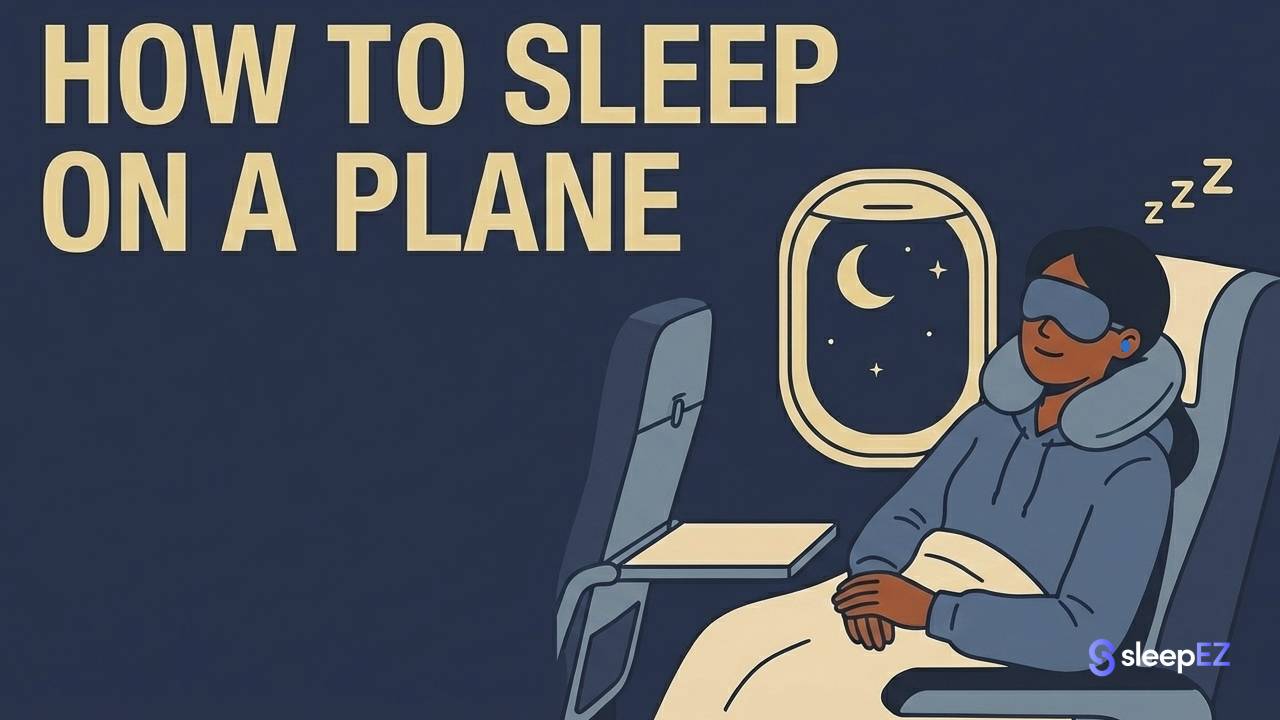
Sleeping on a plane feels impossible. Unless you know a few insider tricks.
This guide covers everything: seat selection, noise control, sleep posture, and what to pack. You'll learn why silicone earplugs play a surprisingly big role in airplane sleep success.
Let's break down exactly how to sleep well at 35,000 feet.
Step 1: Pick the Right Seat
Your seat choice can make or break your sleep.
Window Seat (Best Option)
- You get a wall to lean on
- No one climbs over you
- You control when you get up
Avoid the Aisle
- Carts bump into you
- More noise from foot traffic
- Bathroom lights hit you every time the door opens
Stay Away From These Areas
- Bathrooms (constant noise and traffic)
- Galleys (crew conversations, coffee machines, ice)
- Crew rest stations (movement all flight long)
Front of Cabin = Better Sleep
- Engine noise stays behind you
- Turbulence feels smoother
- Fewer people walk past
Think of it this way: every row back adds more engine rumble. Every row closer to the bathroom adds more interruptions.
Pick your seat like you're picking a hotel room. Location matters.
Step 2: Control the Noise
Airplane cabins hit 70 to 85 decibels during flight. That's as loud as a busy restaurant or a vacuum cleaner.
Dr. Michael Breus, a clinical psychologist and sleep specialist, emphasizes that sleep environment factors like noise levels directly impact sleep quality. Consistent background noise makes it difficult to reach the deep sleep stages your body needs for physical restoration.
Your brain can't relax when it's processing constant sound.
Why Silicone Earplugs Help
Silicone creates a gentle seal in your ear. It blocks the steady hum of engines, muffles cabin chatter, and reduces announcement volume.
Here's what makes silicone better for flights:
- Soft and flexible (no pressure after hours of wear)
- Stays comfortable on long flights
- Creates a seal without feeling intrusive
- Hypoallergenic (no irritation or itching)
- Reusable for multiple trips
Soft silicone plugs like QuietBuds block the constant hum of engines while staying comfortable for hours.
Foam vs. Silicone: Quick Comparison
Foam earplugs expand inside your ear. That feels uncomfortable after an hour or two. They also create too much pressure for side sleepers.
Silicone stays soft. It molds to your ear shape without expanding. You can wear it for 8+ hours without discomfort. Plus, you can reuse quality silicone plugs for up to 10 days of travel.
Most frequent flyers switch to silicone after one long-haul flight. The comfort difference is that obvious.
Step 3: Build a Travel Sleep Kit
Pack these items in your carry-on. They work together to create a sleep-friendly environment.
Your Essential Sleep Kit:
- ✔ Silicone earplugs
- ✔ Neck pillow (memory foam or U-shaped support)
- ✔ Sleep mask (get one that blocks 100% of light)
- ✔ Light blanket or large scarf
- ✔ Comfortable socks
- ✔ Water bottle (stay hydrated)
- ✔ Melatonin (optional, check with your doctor first)
- ✔ Noise-reducing headphones (you can layer these over earplugs)
Keep everything in one pouch. Make it easy to grab when you board.
The earplugs go in first. The sleep mask goes on when you're ready. The neck pillow supports your head once you find your position.
Each item solves one problem. Together, they solve most of them.
Step 4: Master the Best Sleep Position for Planes
Airplane seats weren't designed for sleeping. But you can work with what you've got.
For Upright Sleepers
- Press your back fully into the seat
- Recline slightly (just 2-3 notches)
- Use the window wall as head support
- Position your neck pillow to prevent forward tilt
- Keep your hips pushed back so you don't slide down
For Side Sleepers
- Get a curved travel pillow (not the standard U-shape)
- Wedge it between your head and the window
- Lean your full weight into the pillow
- Tuck your arm between your body and the armrest
For Tall Travelers
- Choose the aisle if you need leg stretch room
- Book a bulkhead seat when possible
- Use your jacket as lumbar support
- Position your pillow higher on your neck
The key is finding one position and committing to it. Don't keep shifting around.
Your body needs 15-20 minutes in the same position to start relaxing.
Step 5: Create a Relaxing Pre-Sleep Routine on Board
Small actions signal to your brain that it's time to sleep.
Follow This Order:
- Dim or turn off your overhead light
- Put your earplugs in before takeoff (yes, this early)
- Set your watch to your destination time zone
- Do light neck and shoulder stretches in your seat
- Avoid screens for 20 minutes before you want to sleep
- Drink water, skip alcohol and caffeine
Wearing your silicone earplugs before takeoff helps your brain adjust to the quieter environment immediately. By the time you're ready to sleep, the reduced noise already feels normal.
Dr. Rebecca Robbins, a sleep researcher at Harvard Medical School, notes that "establishing a consistent pre-sleep routine, even in unusual environments, can significantly improve sleep onset time."
Your routine doesn't need to be complex. It just needs to be consistent.
Think of it as a signal: earplugs in, lights down, time to rest.
Step 6: Time Your Sleep Based on Destination (Jet Lag Strategy)
When you sleep matters as much as how you sleep.
Basic Rule: Only sleep on the plane if it matches nighttime at your destination.
For Short Flights (Under 4 Hours) Avoid sleeping unless it's actually night where you're going. A nap can mess up your arrival day.
For Long-Haul Flights (Over 6 Hours) Aim for 1-2 full sleep cycles. Each cycle runs about 90-120 minutes. That means 2-4 hours of sleep total.
Quick Strategy:
- Flying east? Sleep earlier in the flight.
- Flying west? Stay awake longer and sleep later.
Set an alarm. Sleeping too much on a plane can make jet lag worse when you land.
Your goal is to arrive on your destination's schedule, not your departure schedule.
Step 7: Avoid These Common Airplane Sleep Mistakes
Most people make the same errors. Here's what not to do.
Drinking Alcohol to Fall Asleep Alcohol knocks you out but ruins sleep quality. You wake up groggy and dehydrated.
Using Loud Headphones for White Noise White noise apps work, but headphones at high volume can damage your hearing. Earplugs do the job without the risk.
Napping Too Early If you sleep in the first hour, you'll wake up for the meal service. Time your sleep after the first meal.
Not Blocking Noise Hoping you'll "get used to" the engine sound doesn't work. Your brain keeps processing it.
Wearing Uncomfortable Clothes Tight jeans, belts, and stiff fabrics keep you awake. Dress like you're staying in.
Relying on Caffeine Coffee before a flight keeps you wired, not alert. Skip it if you want to sleep.
❌ Using Giant Bulky Pillows Oversized pillows take up space and don't provide real support. Stick with compact travel pillows.
Here's the truth: most airplane sleep problems come down to noise. The right earplugs solve about 80% of the issue.
Fix the noise, and everything else gets easier.
Final Thoughts
Sleeping on a plane isn't about luck. It's about preparation.
Block cabin noise with soft silicone earplugs, choose the right seat, and set up a simple pre-sleep routine. Suddenly even long-haul flights feel manageable.
You don't need expensive gadgets or first-class tickets. You need a few smart choices and the right tools.
Travelers often prefer hypoallergenic silicone earplugs like QuietBuds because they stay comfortable for hours while reducing the constant engine hum.
Pack your sleep kit before your next flight. Try the window seat. Put your earplugs in early.
You might be surprised how well you sleep.
Ready to upgrade your travel sleep toolkit? Browse our collection of travel-friendly sleep solutions designed for frequent flyers and noise-sensitive travelers.



Leave a comment
This site is protected by hCaptcha and the hCaptcha Privacy Policy and Terms of Service apply.