
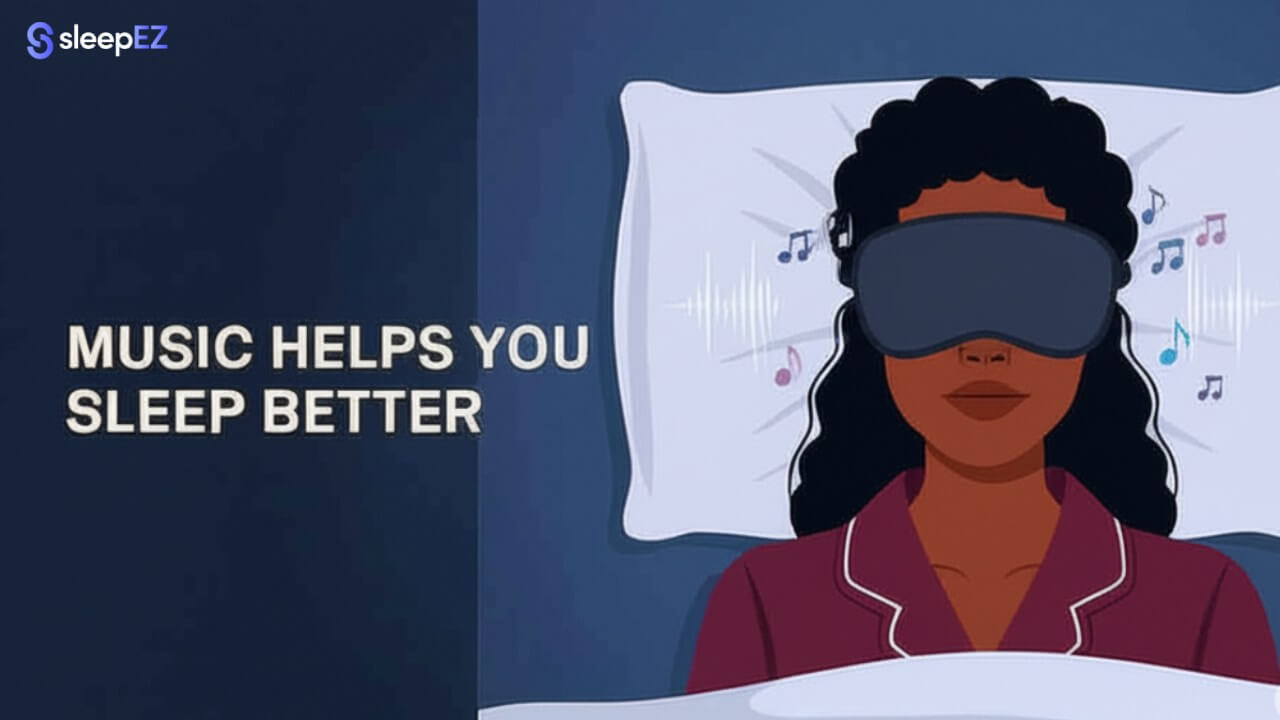
Many of us love drifting off to our favorite tunes or calming sounds. But does music really help us fall asleep faster? Or is it just a nice routine that makes us feel good?
Good news, science backs up what many sleepers already know. Music can help you sleep better, but not all sounds work the same way.
Quick Answer: Can Music Help You Sleep?
Yes, listening to relaxing music before bed may help you fall asleep faster, reduce stress, and improve sleep quality. Research suggests that slow, calming music with a tempo of 60–80 beats per minute has the greatest sleep benefits.
What the evidence shows:
- Music may reduce the time it takes to fall asleep
- It may lower cortisol (the stress hormone) before bed
- Slow music can synchronise with your heart rate and breathing, promoting relaxation
- Consistent use as part of a bedtime routine tends to produce the best results
Why Does Music Make You Sleepy?
Music affects your body and brain in several ways that support sleep:
Lowers cortisol.
Relaxing music has been shown to reduce cortisol, your primary stress hormone. Lower cortisol at bedtime makes it easier for your body to transition into sleep mode.
Slows heart rate and breathing.
Music with a slow, steady tempo (60–80 BPM) can synchronise with your cardiovascular system through a process called entrainment, gradually slowing your heart rate and breathing to match the rhythm.
Reduces anxiety.
Music gives your brain a gentle focal point, reducing the mental space available for anxious or racing thoughts.
Triggers the parasympathetic nervous system.
Calming music activates your body's rest-and-digest response, the opposite of the fight-or-flight state that keeps you awake.
Creates bedtime associations.
Over time, your brain learns to associate specific music with sleep. The same playlist each night becomes a powerful sleep cue.
What Does the Research Say?
The evidence for music and sleep is stronger than many people realise.
Sleep quality improvements.
A 2008 systematic review found that music significantly improved sleep quality in people with sleep difficulties. Participants reported falling asleep faster and waking less during the night.
Reduced sleep latency.
Multiple studies have found that listening to relaxing music for 30–45 minutes before bed reduces sleep onset time, the time it takes to fall asleep.
Benefits for older adults.
Research published in the Journal of Advanced Nursing found that older adults who listened to soft music before bed experienced significantly better sleep quality compared to a control group.
Insomnia support.
A 2021 review found that music-based interventions showed promise for people with mild to moderate insomnia, with improvements in both subjective sleep quality and daytime functioning.
The caveat: Most studies use self-reported sleep quality rather than objective measurements. Individual responses vary, what works for one person may not work for another.
Best Music Genres for Sleep
| Genre | Sleep-Friendly? | Why |
|---|---|---|
| Classical | ✅ Excellent | Slow tempo, no lyrics, emotionally neutral |
| Ambient | ✅ Excellent | Minimal variation, designed for background listening |
| Lo-fi | ✅ Very Good | Gentle rhythm, low stimulation |
| Instrumental Piano | ✅ Very Good | Calming, no distracting lyrics |
| Nature Sounds | ✅ Very Good | Familiar, organic, masking effect |
| Jazz | ⚠️ Depends | Slower jazz works; uptempo jazz doesn't |
| Pop | ❌ Avoid | Stimulating lyrics, variable tempo |
| Rock | ❌ Avoid | High energy, activating |
| Heavy Metal | ❌ Avoid | Increases alertness and arousal |
| Dance/EDM | ❌ Avoid | Fast tempo, designed to energise |
The key rule: Avoid music with lyrics that engage your language processing centres. Instrumental music is almost always better for sleep.
Music vs White Noise vs Nature Sounds: Which Is Best?
| Sound Type | Best For | How It Works |
|---|---|---|
| Relaxing Music | Reducing stress, building bedtime routine | Lowers cortisol, synchronises heart rate |
| White Noise | Blocking sudden environmental sounds | Masks noise changes that trigger waking |
| Pink Noise | Light sleepers, baby sleep | Softer masking, may support deep sleep |
| Nature Sounds | Stress reduction, general relaxation | Familiar, organic, mildly masking |
| Sleep Podcasts | Racing thoughts, overthinking | Gives mind a gentle focal point |
| Binaural Beats | Pre-sleep relaxation, anxiety | Brainwave entrainment |
The honest answer: There's no universally "best" option. Music works best for people whose sleep challenge is stress or anxiety. White noise works best for people whose challenge is environmental noise.
Many people combine both, music to wind down, then white noise or a sound machine for the night.
Can Music Help with Insomnia?
Music may help some people with mild sleep difficulties or stress-related insomnia by promoting relaxation and reducing pre-sleep anxiety.
It may help if your insomnia is related to:
- Stress or anxiety at bedtime
- Racing thoughts
- Difficulty winding down after a busy day
- Inconsistent bedtime routines
It's unlikely to be sufficient if your insomnia involves:
- Chronic difficulty sleeping (3+ nights per week for 3+ months)
- Underlying medical conditions
- Significant sleep disorders
Music is not a treatment for clinical insomnia. If you're experiencing persistent sleep difficulties, speak with your doctor. Cognitive Behavioural Therapy for Insomnia (CBT-I) is the most evidence-based treatment for chronic insomnia.
How Music Affects the Brain at Bedtime
When you listen to relaxing music before bed, your body responds. Your heart rate slows down.
Stress hormones like cortisol drop. Your brain begins to shift into sleep mode.
Research shows that slow music, about 60 beats per minute, can sync with your brainwaves. This helps ease you into a sleepy state.
A 2018 study found that adults who listened to music at bedtime had better sleep quality. They fell asleep faster and woke up less during the night.
What Types of Music Help You Sleep Best?
Not all music works for sleep. Research points to specific qualities that make sounds sleep-friendly.
The right music slows your heart rate and lowers stress hormones, while the wrong tracks can keep your mind racing. Here's what suggests:
Best for sleep:
-
- Classical music (like Bach or Mozart)
- Ambient sounds: Creates a soft backdrop without grabbing attention
- Lo-fi beats: Soft drums and mellow melodies popular with students and night workers.
- Binaural beats: Different tones in each ear may help slow brain activity.
What makes good sleep music:
-
- Slow tempo (60-80 beats per minute): This matches a resting heart rate and helps slow down your breathing.
- No lyrics (or very soft ones): Words make your brain pay attention and process meaning, which keeps you awake.
- Gentle, steady patterns: Music that slowly builds then drops or changes quickly can jolt you awake.
- Low bass: Deep, soft bass notes tend to be more soothing than high-pitched sounds.
Fast songs with lots of words can keep your brain too busy. The lyrics make you follow along and engage your mind.
Save your favorite pop hits or rock anthems for daytime. Music that stirs up strong memories or feelings can also keep you awake.
Read: SNR vs NRR
How Long Should You Listen to Music Before Bed?
Most research suggests 30–45 minutes of relaxing music before sleep produces the best results. This gives your body enough time to respond to the music's physiological effects, lower heart rate, reduced cortisol, slower breathing.
Practical tips:
- Start your music 30–45 minutes before your target sleep time
- Use a sleep timer so music stops automatically after you fall asleep
- Keep the volume low, barely audible is often more effective than loud
- Choose the same playlist or genre each night to build a sleep association
Is It Okay to Sleep with Music All Night?
For most people, sleeping with music all night is not harmful at low volumes. However, there are some considerations:
Potential benefits:
- Continuous sound masks environmental disturbances
- May help light sleepers stay asleep through noise events
Potential downsides:
- Changing songs, playlist interruptions, or notifications can cause micro-awakenings
- Some research suggests audio during deep sleep may slightly affect sleep architecture
- Battery alerts or device sounds can disrupt sleep
The recommendation: Use a sleep timer set for 60–90 minutes. Most people fall asleep within this window, and the music doesn't need to play all night to be effective.
Is It Bad to Sleep with Headphones?
Standard earbuds and over-ear headphones create several problems for overnight use:
- Earbuds press against your ear canal when you lie on your side, causing discomfort and soreness
- Wired headphones tangle during sleep and can create a safety hazard
- Over-ear headphones are bulky and fall off during the night
- High volume through any headphone type can affect hearing over time
The safer alternative:
A Bluetooth sleep mask delivers audio through ultra-thin 4mm speakers built into the mask itself, nothing pressing against your ear canal. It blocks all light, connects wirelessly to any music app, and the flat speaker design means it stays comfortable even when you're lying on your side.
For overnight music listening, it's one of the most practical solutions available, particularly for side sleepers who find earbuds painful after 20–30 minutes.
Can Children and Babies Sleep with Music?
Yes, gentle music can be a helpful part of a baby or child's sleep routine.
For babies:
- Lullabies and gentle instrumental music are ideal
- Keep volume below 50 dB at crib level (use a free decibel app to check)
- Avoid headphones or earbuds for babies and young children
- A sound machine with music options is safer and more practical than a phone or speaker
For older children:
- Instrumental music works better than music with lyrics
- Set a sleep timer so music stops after 30–45 minutes
- Avoid screens, use a sound machine or a speaker rather than a phone or tablet
What If Music Doesn't Help You Sleep?
Music isn't effective for everyone. If you've tried it and it's not working, here are alternatives worth exploring:
- White noise, masks environmental sounds rather than engaging the mind
- ASMR, triggers a relaxation response through specific sounds
- Binaural beats, uses audio to support brainwave states associated with sleep
- Sleep podcasts, gentle storytelling for people with racing thoughts
- Meditation apps, guided relaxation and breathing exercises
- A sound machine, continuous background sound without the engagement of music
The best sleep audio is the one that works for you. It may take some experimentation to find the right approach.
Building a Sleep Routine with Music
Making music part of your sleep habits works best with a steady plan. Your brain responds to patterns, and routine signals it's time for rest.
Sleep experts say consistency trains your brain for better sleep.
- Pick a 30-60 minute playlist - long enough to drift off without playing all night.
- Listen at the same time each night - start 30 minutes before bedtime.
- Keep your room dark and cool (65-68°F/18-20°C).
- Add sleep cues like dim lights or a sleep mask to signal bedtime.
- Set a timer to stop music after you fall asleep to protect deep sleep phases.
Most sleep experts say it takes about two weeks to form a habit. Stick with your music routine for at least 14 days before deciding if it works for you.
Over time, your brain will link this music with sleep. Just hearing the first few notes might make you yawn!
This is called a "conditioned response" your body learns that these sounds mean it's time to rest.
What About Podcasts or Nature Sounds?
Music isn't the only sound that helps with sleep. Research shows non-musical sounds often work just as well, sometimes better.
Many people prefer:
- Ocean waves or rain sounds: These mimic steady rhythms heard before birth that calm our brains.
- White noise: Creates a sound blanket that blocks other noises that might wake you.
- Sleep stories or soft-spoken podcasts: A gentle voice can be more soothing than music.
- Fan or air purifier hum: Everyday sounds that mask other noises with steady background sound.
Each type of sound affects your brain in different ways:
-
- Nature sounds lower stress and can make you feel safe
- White noise blocks other sounds from waking you
- Voices give your mind something gentle to focus on
We all respond to sounds in our own way. What helps your partner sleep might keep you wide awake.
Try different sounds for a few nights each to find your perfect sleep soundtrack.
The Best Ways to Listen to Sleep Music
How you listen affects your sleep quality. The right setup prevents discomfort and helps music do its job better.
Good options:
-
- External speakers (low volume): Place them three feet from your bed. Sound should be just loud enough to hear.
- Sleep-friendly devices: Made for bedtime with timers, soft buttons, and gentle light.
- Bluetooth sleep masks: Block light while playing sounds without cords or painful earbuds.
Regular headphones or earbuds can get uncomfortable when you roll over. The hard plastic may press into your ears or head. They might even hurt your ears after hours of use. If you share a bed, they might also come unplugged or get tangled.
Some sleepers prefer white noise machines instead. These create steady background sounds all night without needing a playlist. Many have timers and different sound options built in. They're great for:
-
- Light sleepers who wake easily
- People in noisy buildings or neighborhoods
- Parents who want to mask household sounds from sleeping children
Is There a Downside to Music at Night?
Music can sometimes work against good sleep if you're not careful about how you use it. While the right sounds help many people, certain habits can turn your sleep aid into a sleep problem. Being aware of these potential issues helps you get the most benefit from sleep sounds.
Phone problems: If you use your phone for music, texts and alerts might wake you. The blue light from screens also keeps your brain awake. Always turn on "Do Not Disturb" mode or use airplane mode.
Too much energy: Some songs might stir up thoughts or feelings when you should be winding down. Songs tied to strong memories can keep your mind active and busy.
Dependency: You might find it hard to sleep without your music. This can be a problem when traveling or if your device breaks. Try to have some nights without music to keep your sleep skills strong.
Partner disruption: Your perfect sleep track might be your partner's worst nightmare. Use headphones or find sounds you both enjoy.
All-night playback: Music playing all night can disrupt your natural sleep cycles. Use a timer to stop playback after 30-60 minutes.
Try to use music as a helper, not something you can't sleep without. The best sleep tools are ones that support your natural sleep ability, not replace it.
Frequently Asked Questions
Can listening to music help you fall asleep faster?
Research suggests yes, for many people, relaxing music reduces the time it takes to fall asleep by lowering stress hormones and slowing heart rate. Slow, instrumental music with a tempo of 60–80 BPM tends to work best.
What is the best music for sleep?
Classical, ambient, lo-fi, and instrumental piano are among the most consistently recommended genres. The key is choosing music without stimulating lyrics, with a slow and steady tempo.
Is it okay to sleep with music playing all night?
Generally yes, at low volumes. However, using a sleep timer (60–90 minutes) is recommended to avoid playlist interruptions and notifications that can cause micro-awakenings.
Can music improve sleep quality?
Research suggests it may. Multiple studies have found improvements in self-reported sleep quality, reduced sleep onset time, and fewer nighttime awakenings in people who listen to relaxing music before bed.
Is it bad to sleep with headphones?
Standard earbuds can cause ear canal pressure and discomfort, particularly for side sleepers. A Bluetooth sleep mask with built-in flat speakers is a more comfortable alternative for overnight listening.
Can music help insomnia?
Music may help with mild, stress-related sleep difficulties. It's not a treatment for clinical insomnia, persistent insomnia should be discussed with a healthcare professional.
What volume should sleep music be?
Keep it low, below 50 dB at ear level. You should be able to hear it clearly but comfortably. If you need to raise your voice to speak over it, it's too loud.
How long should I listen to music before bed?
Most research suggests 30–45 minutes. This gives your body enough time to respond to the music's calming effects before sleep.
Can babies sleep with music?
Yes. Gentle lullabies and instrumental music are suitable for babies.
Keep volume below 50 dB at crib level and avoid headphones for young children.
Is white noise better than music for sleep?
They serve different purposes. White noise masks environmental sounds.
Music reduces stress and anxiety. If noise is your main problem, white noise is more effective.
If stress is your challenge, music may work better.
Music Helps, When You Use It Right
The research is clear: music can be a simple, low-cost way to improve your sleep. It works best when you choose the right sounds and create a steady routine.
Try different types of sleep sounds to find what works for you. A calm mind leads to better rest.
Looking for a comfortable way to listen to sleep music in bed? Explore our audio-ready sleep masks and white noise machines.

Leave a comment
This site is protected by hCaptcha and the hCaptcha Privacy Policy and Terms of Service apply.