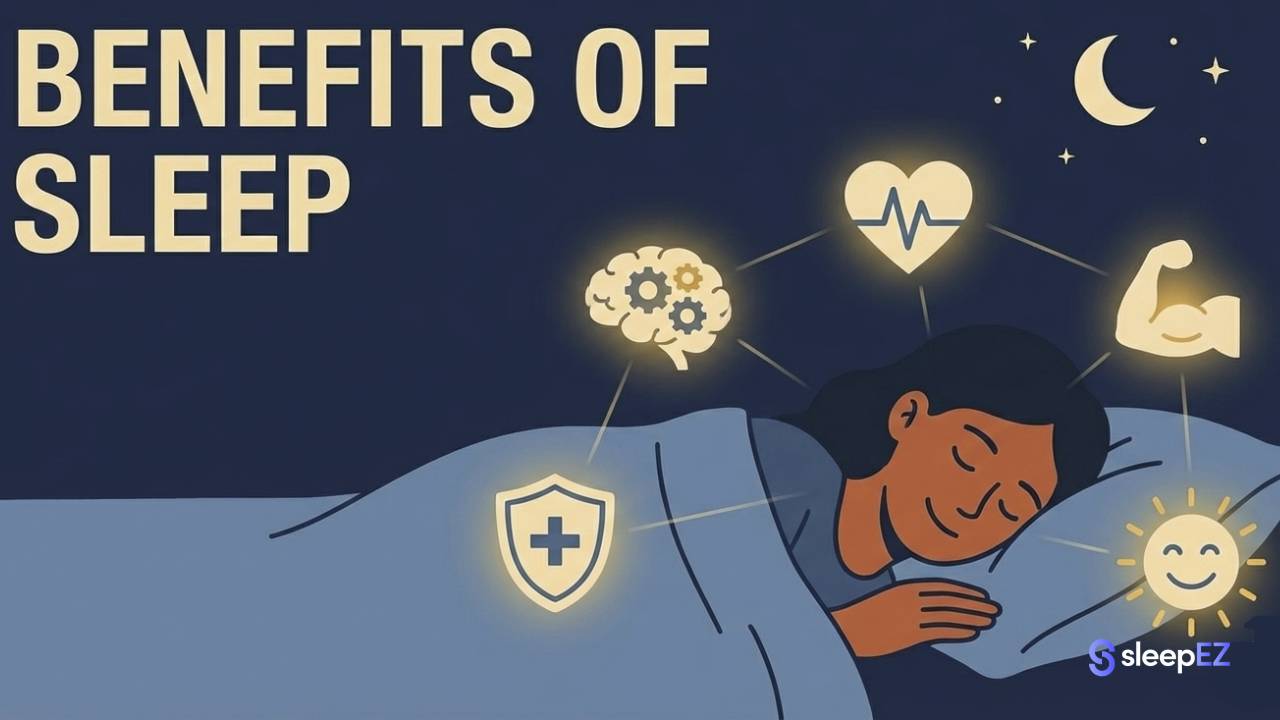
Sleep isn't just "down time." It's an active biological state where your body repairs itself, your brain cleans out waste, and your memories get filed away for long-term storage.
We sacrifice sleep for productivity all the time. But here's the truth: sleep IS productivity. Everything you want from your waking hours depends on what happens while you're unconscious.
Let's look at exactly what sleep does for you, backed by hard science.
The Physical Benefits: Repair & Protect
1. Immunity Boost: Your Body's Defense System Gets Stronger
While you sleep, your immune system releases proteins called cytokines. These proteins fight infection and inflammation. Research from the National Institutes of Health shows that sleep deprivation triggers elevated levels of inflammatory markers, weakening your body's defense.
Think of sleep as your biological armor. Miss it consistently, and you're going into battle unprotected.
Short sleep means more sick days. People who sleep less than seven hours are three times more likely to catch a cold than those who sleep eight hours or more.
2. Heart Health: Blood Pressure Drops Naturally
Your heart gets a break at night. Blood pressure naturally drops during sleep in what doctors call "the dipper effect." This rest period is critical for cardiovascular health.
When you don't sleep enough, your blood pressure stays elevated. This puts constant strain on your heart and blood vessels. Over time, this increases your risk of heart disease and stroke.
Sleep is maintenance time for your entire circulatory system.
3. Weight Management: Hunger Hormones Reset
Sleep controls two key hormones: ghrelin and leptin. Ghrelin tells you you're hungry. Leptin tells you you're full.
Sleep deprivation increases ghrelin and decreases leptin. This means you feel physically hungrier when you're tired. Your body isn't broken; it's running on the wrong chemical signals.
Studies show sleep-deprived people consume up to 300 extra calories per day. That's not a willpower problem; it's a biology problem.
4. Athletic Recovery: Muscles Repair During Deep Sleep
Muscle repair happens primarily during deep sleep. Your body releases growth hormone, which triggers tissue repair and muscle building.
Athletes who sleep more perform better. Reaction times improve, accuracy increases, and injuries decrease. Sleep is when your body actually builds the adaptations from your training.
Skip recovery sleep, and you're wasting your workout.
The Mental & Cognitive Benefits: Focus & Clarity
5. The "Brain Wash": Your Glymphatic System Clears Toxins
Here's something amazing: your brain has a waste removal system called the glymphatic system. It flushes out toxic proteins like beta-amyloid, which is linked to Alzheimer's disease.
Research published in the NIH's PubMed Central database found that the brain's waste clearance system operates at nearly double capacity during sleep. When you're awake, this cleaning system slows to just 10% capacity.
This "brain cleaning" process is most active during deep sleep. If noise wakes you up, the cleaning stops. Environmental disruptions fragment your sleep and prevent full waste clearance.
Sound control during sleep protects these critical brain maintenance cycles. Even brief noise exposures can interrupt deep sleep phases without fully waking you.
6. Memory Consolidation: Moving Information to Long-Term Storage
Your brain doesn't just rest at night. It actively reorganizes information. A study published in the Proceedings of the National Academy of Sciences found that during sleep, the brain transfers information from temporary storage in the hippocampus to permanent storage in the cortex.
Think of your hippocampus as RAM and your cortex as a hard drive. Sleep is when the save function runs.
Students who sleep after studying remember more than those who stay awake. The information literally gets written into long-term memory while you sleep.
7. Problem Solving: The "Sleep On It" Effect Is Real
Ever notice how problems seem clearer after a good night's sleep? That's not just feeling refreshed. Your brain actively works on problems while you sleep.
During REM sleep, your brain makes new connections between distantly related concepts. This is why creative insights often come the morning after wrestling with a problem.
Sleep doesn't just help you remember facts. It helps you understand relationships between ideas.
The Emotional Benefits: Mood & Stress
8. Emotional Regulation: Your Fear Center Calms Down
The amygdala is your brain's fear and emotion center. When you're sleep-deprived, the amygdala becomes 60% more reactive to negative stimuli.
This means everything feels worse when you're tired. Small problems seem big. Neutral comments feel like attacks. Your emotional volume knob is turned way up.
Sleep recalibrates your emotional responses. It's not about being tougher; it's about having a properly functioning nervous system.
9. Stress Reduction: Cortisol Levels Drop
Sleep lowers cortisol, your primary stress hormone. High cortisol keeps you wired and alert, which is helpful in genuine emergencies but destructive when chronic.
Here's the vicious cycle: high stress makes it hard to sleep, which leads to more stress. Breaking this cycle requires creating the right conditions for your nervous system to downshift.
Calming sound environments can help lower baseline anxiety before bed. Consistent background noise masks sudden disruptions and signals safety to your nervous system.
Understanding Sleep Stages: Why Quality Matters
Not all sleep is equal. Your brain cycles through distinct stages roughly every 90 minutes throughout the night.
Stage 1 (N1) is light sleep, the transition between wake and sleep. You can be easily awakened here.
Stage 2 (N2) is where you spend most of your night. Your heart rate slows and body temperature drops. This stage prepares you for deep sleep.
Stage 3 (N3) is deep sleep, also called slow-wave sleep. This is when physical repair happens. Growth hormone releases, tissues regenerate, and your immune system strengthens. The glymphatic system is most active here.
REM sleep is when most dreaming occurs. Your brain is highly active, processing emotions and consolidating memories. REM increases in duration as the night progresses.
Interruptions at any stage reset the cycle. This is why continuous sleep matters more than total time in bed. You need to complete multiple full cycles to get adequate deep sleep and REM sleep.
The "Magic Number": Is 8 Hours Actually Enough?
Adults need seven to nine hours of sleep per night. But here's what most people miss: time in bed does not equal restorative sleep.
You can lie in bed for eight hours and still wake up exhausted if your sleep is fragmented. Micro-wakeups interrupt your sleep cycles, even if you don't remember them.
Quality beats quantity, but you need both. Each complete sleep cycle lasts about 90 minutes. To hit the deep sleep stages required for brain cleaning and memory consolidation, you need continuous, uninterrupted cycles.
Can you sleep too much? Yes. Consistently sleeping more than nine hours is associated with increased health risks. This might indicate underlying health issues or poor sleep quality that requires more time to feel rested.
The goal isn't just more hours. It's more complete, uninterrupted cycles.
Top 10 Benefits of Sleep Summary
| Benefit | What It Does |
|---|---|
| Immunity | Stronger defense against illness through cytokine production |
| Heart Health | Lower blood pressure during sleep protects cardiovascular system |
| Weight Control | Regulated appetite hormones prevent overeating |
| Mood Stability | Better emotional regulation and reduced anxiety |
| Focus | Improved concentration and mental clarity |
| Memory | Enhanced retention through hippocampus-to-cortex transfer |
| Skin Repair | Increased collagen production and cellular regeneration |
| Energy | Adenosine clearance restores mental and physical energy |
| Safety | Faster reaction times and better decision-making |
| Longevity | Consistent sleep linked to longer, healthier lifespan |
How to Unlock These Benefits: Optimize Your Sleep Environment
Now you know what sleep does. Here's how to actually get these benefits.
Control Light Exposure
Light is the primary signal that tells your brain whether it's day or night. Even small amounts of light suppress melatonin, your sleep hormone.
Streetlights, device indicators, and morning sun all disrupt this signal. Complete darkness allows your brain to produce melatonin naturally and maintain deep sleep longer. Blackout curtains or sleep masks eliminate these disruptions.
Improve Breathing Quality
Mouth breathing during sleep reduces oxygen intake and increases heart rate. Nasal breathing activates your parasympathetic nervous system and improves oxygen absorption.
If you wake with a dry mouth or snore regularly, you're likely mouth breathing. Gentle mouth taping or addressing nasal congestion can shift you to nasal breathing. Better oxygenation means better cellular repair and more restorative sleep.
Manage Sound Disruptions
Sudden noises trigger your brain's threat detection system, fragmenting sleep even if you don't fully wake. Consistent background sound masks these disruptions.
White noise machines, fans, or earplugs create a protective sound barrier. Your brain stays in deep sleep longer, allowing the glymphatic system to complete its cleaning cycle.
Maintain Cool Temperature
Your body temperature naturally drops during sleep. A cool room (around 65-68°F or 18-20°C) supports this process. Overheated rooms fragment sleep and reduce time in deep stages.
Establish Consistent Timing
Your circadian rhythm thrives on predictability. Going to bed and waking at consistent times reinforces your natural sleep-wake cycle. Even on weekends, stay within an hour of your regular schedule.
Create a Wind-Down Routine
Your nervous system needs time to transition from alert to rest. Spend 30-60 minutes before bed doing calming activities. Dim lights, avoid screens, and engage in relaxing practices like reading or gentle stretching.
Tools That Support Better Sleep
If you're ready to take action, specific tools can help optimize each aspect of your sleep environment:
- For light control: The Dreamy Sound Sleep Mask provides complete darkness while remaining comfortable for side sleepers
- For breathing optimization: Breathe Mouth Tape gently encourages nasal breathing throughout the night
- For sound management: QuietBuds block disruptive noise without the discomfort of traditional earplugs
These aren't requirements, but they address the three most common sleep environment problems: light intrusion, mouth breathing, and noise disruption.
Take Action Tonight
You know the why. Now master the how.
Your bedroom needs three things: darkness, silence, and proper breathing. Every benefit listed above depends on continuous, deep sleep.
Start with one change tonight. Block the light sources in your room. Lower the temperature. Create a consistent bedtime. Each small improvement compounds into better sleep quality.
Sleep isn't something that happens to you. It's something you create the conditions for.
Start tonight.

Leave a comment
This site is protected by hCaptcha and the hCaptcha Privacy Policy and Terms of Service apply.