
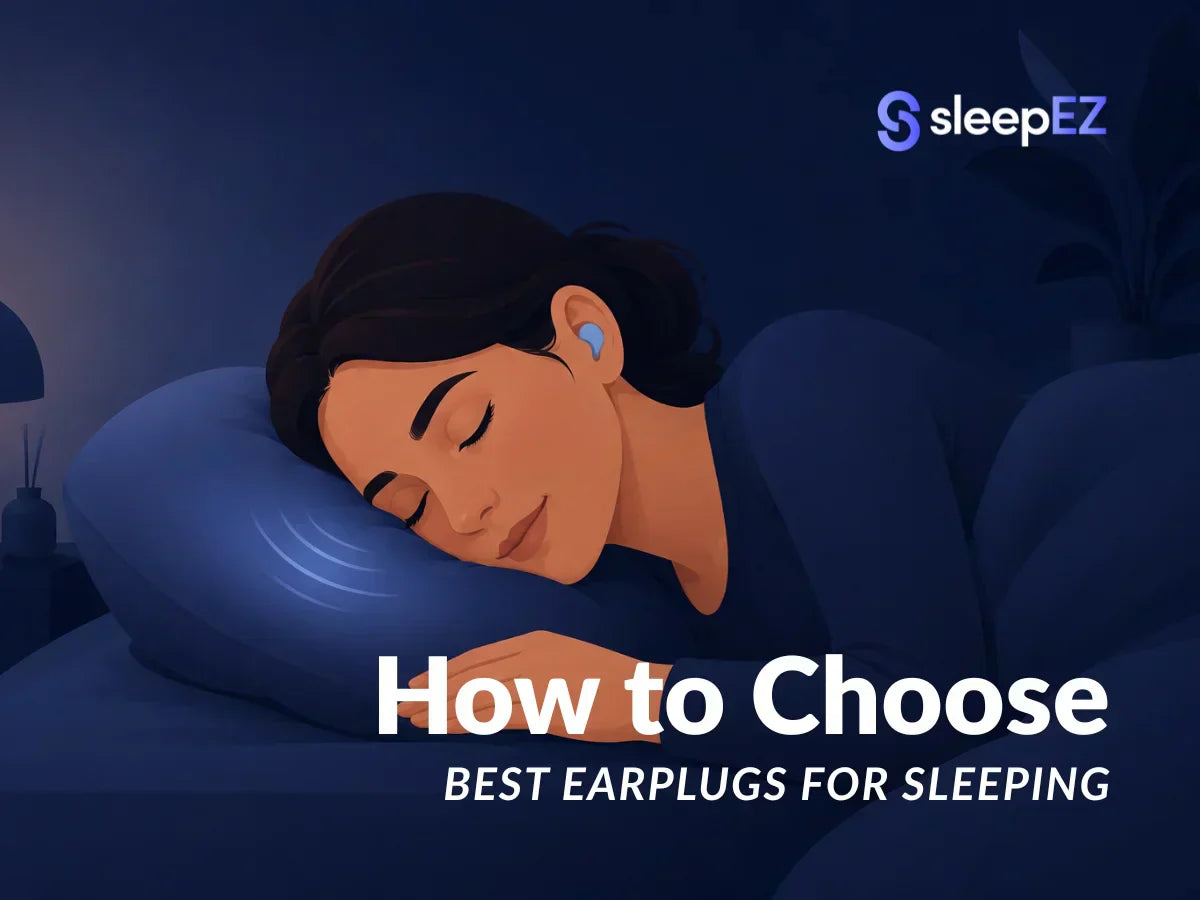
Sleeping with noise can be frustrating, especially if you are easily disturbed by snoring, traffic, neighbours, or other nighttime sounds. Even small interruptions can affect sleep quality and leave you feeling tired the next day.
For side sleepers, finding comfortable earplugs can be even more difficult. Some earplugs stick out too far or create pressure against the pillow, making them uncomfortable to wear throughout the night.
Not all earplugs work the same way. Different materials, shapes, and noise reduction ratings can affect both comfort and performance.
This guide explains the different types of earplugs for sleeping, what to look for, and how to choose the right option for your sleep style and environment.
If you are looking for a soft flush-fit option for side sleeping, Quietbuds by SleepEZ are designed to mould comfortably to your ears while helping reduce nighttime noise.
Why Noise Affects Sleep Quality

Noise is one of the most common causes of disrupted sleep. Even if a sound does not fully wake you up, it can interrupt your sleep cycle and reduce sleep quality.
Small interruptions throughout the night may lead to fragmented sleep, making it harder for your body to stay in deeper and more restorative sleep stages.
This is especially common for light sleepers or people who sleep near traffic, noisy neighbours, or a snoring partner.
Consistent background sound can sometimes help reduce sudden noise disruptions. Learn more in what is white noise and see how sleep sensitivity affects rest in light sleeper.
Types of Earplugs for Sleep
Different earplug materials and designs affect comfort, fit, and noise reduction. The best option depends on your sleeping position, ear sensitivity, and the type of noise you are trying to reduce.
Foam Earplugs
Foam earplugs are one of the most common options for sleep. They usually offer high noise reduction ratings and are widely available at pharmacies and supermarkets.
These earplugs are disposable and expand inside the ear canal to block sound. However, they may protrude from the ear, which can create discomfort for side sleepers.
Moldable Silicone Earplugs
Moldable silicone earplugs are designed to shape around your ear for a more customised fit. Because they sit flush against the ear, they are often more comfortable for side sleepers.
This soft and flexible design helps reduce pressure from pillows while still providing effective noise reduction.
Quietbuds by SleepEZ use mouldable silicone to create a flush-fit design that supports comfort during sleep.
Pre-Formed Silicone Earplugs
Pre-formed silicone earplugs are reusable and come in fixed shapes with different tip sizes. They are designed for repeated use and are often marketed as a long-term sleep solution.
Comfort and performance can vary depending on ear shape. Some people find the fixed design comfortable, while others may experience pressure or fit issues during sleep.
Wax Earplugs
Wax earplugs have a soft texture and mould gently around the outer ear canal. They create a flat profile that can work well for side sleepers.
They usually provide moderate noise reduction and are often chosen by people who prefer softer materials or have sensitive ears.
Types of Earplugs for Sleep

Different earplug materials and designs affect comfort, fit, and noise reduction. The best option depends on your sleeping position, ear sensitivity, and the type of noise you are trying to reduce.
Foam Earplugs
Foam earplugs are one of the most common options for sleep. They usually offer high noise reduction ratings and are widely available at pharmacies and supermarkets.
These earplugs are disposable and expand inside the ear canal to block sound. However, they may protrude from the ear, which can create discomfort for side sleepers.
Foam earplugs are often chosen for strong noise reduction, but comfort can vary depending on fit and sleeping position.
Moldable Silicone Earplugs
Moldable silicone earplugs are designed to shape around your ear for a more customised fit. Because they sit flush against the ear, they are often more comfortable for side sleepers.
The soft and flexible material helps reduce pressure from pillows while still providing effective noise reduction.
QuietBuds by SleepEZ use mouldable silicone to create a flush-fit design that supports comfort during sleep and helps reduce common nighttime noise.
Pre-Formed Silicone Earplugs
Pre-formed silicone earplugs are reusable and come in fixed shapes with different tip sizes. They are designed for repeated use and are often marketed as a long-term sleep solution.
Comfort and performance can vary depending on ear shape. Some people find the fixed design comfortable, while others may experience pressure or fit issues during sleep.
They can work well for people who prefer reusable earplugs and do not require a mouldable fit.
Wax Earplugs
Wax earplugs have a soft texture and mould gently around the outer ear canal. They create a flat profile that can work well for side sleepers.
They usually provide moderate noise reduction and are often chosen by people who prefer softer materials or have sensitive ears.
Because wax earplugs sit flatter against the ear, they can feel more comfortable during overnight sleep compared to some rigid designs.
Why Design Matters for Side Sleepers
For side sleepers, comfort is often just as important as noise reduction. Earplugs that feel fine during the day may become uncomfortable once your ear is pressed against a pillow for several hours.
One of the biggest problems is pressure points. Earplugs with protruding stems or rigid shapes can press into the ear during sleep, creating discomfort and interrupting rest.
Pillow pressure can also affect how securely earplugs stay in place. Larger or fixed-shape earplugs may shift during the night, reducing both comfort and noise blocking performance.
This is why flush-fit designs are important for side sleepers. Earplugs that sit flatter against the ear create less pressure and usually feel more comfortable throughout the night.
Soft mouldable silicone and wax materials are often preferred because they adapt better to different ear shapes and reduce irritation caused by prolonged pressure.
If you have smaller ears, see best earplugs for small ears. You can also compare material differences in silicone vs foam earplugs for sleeping.
Understanding SNR and Noise Reduction

When choosing earplugs for sleep, you will often see a rating called SNR. SNR stands for Single Number Rating and measures how much noise the earplugs are designed to reduce.
For sleeping, an SNR between 24–27dB is usually enough to reduce common nighttime sounds such as snoring, traffic, air conditioning, or household noise without completely blocking important sounds like alarms.
For example, snoring is often around 50–60dB. Earplugs with a 27dB rating can significantly lower the perceived volume and make the sound less disruptive during sleep.
Higher noise reduction is not always better. Earplugs with extremely high ratings may feel less comfortable, create more pressure inside the ear, or block too much sound for some sleepers.
Fit and comfort also matter. A comfortable earplug that stays secure throughout the night will often perform better than a higher-rated earplug that shifts or falls out during sleep.
To understand the difference between common rating systems, see snr vs nrr.
Popular Earplug Options for Sleeping in Australia
Different earplugs suit different sleep styles and comfort preferences. Here are some of the most common options available for sleeping in Australia.
1. QuietBuds by SleepEZ – Best Overall Ear Plugs for Sleeping

Best Earplugs for Sleeping
★★★★★ 4.8/5
QuietBuds
QuietBuds earplugs for sleeping are designed for sensitive ears. They mold gently to your ear shape, reduce 27dB of noise, and stay secure all night — perfect for side sleepers and light sleepers
From $16.96
View QuietBuds by SleepEZQuietBuds use mouldable silicone that shapes comfortably to your ears. The flush-fit design helps reduce pressure against the pillow, making them suitable for side sleepers.
They are reusable, easy to clean, and designed to reduce common nighttime sounds such as snoring and traffic noise. QuietBuds also offer strong value compared to many premium reusable earplugs.
Pros:
- Soft mouldable silicone
- Comfortable for side sleepers
- Reusable and washable
- Flush-fit design
- Good value for nightly use
Things to Note:
- The soft material may need to be replaced after a few months to maintain optimal shape and cleanliness.
- It may take a little practice to get the perfect mold at first, but the custom fit is worth the effort.
Best for: Side sleepers and people looking for a comfortable reusable option.
Loop Quiet 2

Loop Quiet 2 earplugs use a reusable silicone design with a ring-shaped profile. They are lightweight and designed for everyday comfort.
Pros:
- Reusable silicone material
- Lightweight and portable
- Multiple sizes included
Cons:
- Fixed shape may not fit every ear comfortably
- May create pressure for some side sleepers
Best for: People who prefer a reusable pre-formed silicone design.
Loop Dream™

Loop Dream™ is designed specifically for sleep and focuses on comfort and noise reduction using softer silicone materials.
Pros:
- Designed for sleep comfort
- Multiple ear tip sizes
- Reusable construction
Cons:
- Higher price point
- Fixed shape may not suit all ears
Best for: People looking for a premium reusable earplug option.
Foam Earplugs

Foam earplugs are disposable and widely available. They usually offer high noise reduction ratings and are often the cheapest option.
Pros:
- Strong noise reduction
- Budget-friendly
- Easy to find
Cons:
- Disposable only
- May protrude and cause discomfort for side sleepers
- Fit can vary depending on insertion technique
Best for: Occasional use or people prioritising maximum noise reduction.
Silicone Putty Earplugs

Silicone putty earplugs mould over the ear canal opening to create a customised seal. They sit flatter against the ear compared to many foam designs.
Pros:
- Mouldable fit
- Comfortable flat profile
- Suitable for side sleeping
Cons:
- Requires proper moulding technique
- Needs regular cleaning
Best for: People who want a soft mouldable alternative to foam earplugs.
How to Choose Earplugs for Better Sleep
The best earplugs for sleeping depend on your comfort needs, sleeping position, and sleep environment.
Your Sleeping Position
Side sleepers usually benefit from softer earplugs with a flush-fit design. Earplugs that protrude too much may create pressure against the pillow.
Back sleepers and light sleepers may have more flexibility with different earplug shapes.
Noise Level
Consider the type of noise you are trying to reduce. Light household sounds may only require moderate noise reduction, while loud snoring or traffic may need stronger sound blocking.
Ear Sensitivity
People with sensitive ears often prefer softer materials such as mouldable silicone or wax. Fixed-shape earplugs may feel uncomfortable if they do not match your ear shape well.
Reusable vs Disposable
Reusable earplugs cost more upfront but can save money over time. They are also more environmentally friendly.
Disposable foam earplugs may work well for travel or occasional use, but they require regular replacement.
Hygiene and Cleaning
Keeping earplugs clean is important for both comfort and ear health. Reusable earplugs should be cleaned regularly and replaced when they become worn or discoloured.
Learn more in how to clean reusable silicone earplugs, how long do reusable silicone earplugs last, and do earplugs cause ear infections.
Is It Safe to Sleep With Earplugs Every Night?
For most people, sleeping with earplugs is generally safe when they are used properly and kept clean. Choosing the right material and fit can help reduce discomfort and improve long-term comfort.
Hygiene is important, especially for reusable earplugs. Earplugs should be cleaned regularly to reduce the buildup of dirt, oils, and bacteria.
Proper fit also matters. Earplugs that are too large, too rigid, or inserted incorrectly may cause irritation or discomfort during sleep.
Reusable earplugs should be replaced when they become worn, discoloured, or lose their shape. Disposable foam earplugs should not be reused repeatedly.
Learn more in is sleeping with ear plugs safe.
A Comfortable Option for Side Sleepers
Many side sleepers struggle with earplugs that press uncomfortably against the pillow. Rigid shapes and protruding designs can create pressure points that interrupt sleep.
QuietBuds by SleepEZ are designed with soft mouldable silicone that sits flush against the ear. This low-profile design helps reduce pressure while supporting a more comfortable fit during sleep.
Because the silicone moulds to the shape of your ear, QuietBuds can help create a more customised fit compared to fixed-shape earplugs. They are also reusable and easy to clean for regular nightly use.
For people dealing with snoring, traffic, neighbours, or light sleep sensitivity, a soft flush-fit design can make a noticeable difference in comfort and sleep quality.
👉 Explore QuietBuds by SleepEZ
How to Choose Earplugs for Better Sleep

Choosing the right earplugs depends on your sleep habits, comfort preferences, and the type of noise you are trying to reduce.
Your Sleeping Position
Your sleeping position affects which earplug design will feel most comfortable. Side sleepers usually benefit from soft flush-fit earplugs that create less pressure against the pillow.
Larger or protruding earplugs may become uncomfortable during overnight sleep, especially if you move frequently during the night.
Noise Level
Different sleep environments require different levels of noise reduction. Light household sounds may only need moderate sound blocking, while loud snoring or traffic noise may require stronger noise reduction.
The goal is not always to remove all sound completely, but to reduce disruptions enough for more stable sleep.
Ear Sensitivity
People with sensitive ears often prefer softer materials such as mouldable silicone or wax. Rigid or fixed-shape earplugs may cause discomfort if they do not fit the ear properly.
Comfort is important because even effective earplugs can interrupt sleep if they create pressure or irritation.
Reusable vs Disposable
Reusable earplugs are designed for long-term use and can provide better value over time. They are also more environmentally friendly compared to disposable foam options.
Disposable earplugs may work well for travel or occasional use, but they require regular replacement and may become costly with daily use.
Hygiene and Cleaning
Keeping earplugs clean is important for comfort and ear health. Reusable earplugs should be washed regularly and replaced when they become worn, discoloured, or lose their shape.
Good hygiene can also help reduce irritation and bacteria buildup during repeated use.
Learn more in how to clean reusable silicone earplugs, how long do reusable silicone earplugs last, and do earplugs cause ear infections.
Frequently Asked Questions
What are the best earplugs for sleeping?
The best earplugs for sleeping depend on your sleeping position, comfort preferences, and noise level. Side sleepers often prefer soft mouldable silicone designs that sit flush against the ear.
Are silicone or foam earplugs better for sleep?
Silicone earplugs are usually more comfortable for side sleepers because they create less pressure against the pillow. Foam earplugs may offer higher noise reduction but can protrude more and feel less comfortable overnight.
What earplugs work best for side sleepers?
Soft flush-fit earplugs, such as mouldable silicone or wax designs, are often the most comfortable for side sleepers because they reduce pressure points during sleep.
Can earplugs block snoring?
Earplugs can significantly reduce snoring noise, although they may not block it completely. Proper fit and consistent noise reduction are important for improving sleep quality.
Is it safe to wear earplugs every night?
For most people, yes. Earplugs are generally safe for nightly use when they are cleaned properly and replaced when worn out.
What does SNR mean on earplugs?
SNR stands for Single Number Rating. It measures how much noise the earplugs are designed to reduce.
How often should reusable earplugs be replaced?
Reusable earplugs should be replaced when they lose their shape, become discoloured, or no longer fit comfortably. Replacement frequency depends on usage and cleaning habits.
Can earplugs cause ear infections?
Poor hygiene or repeatedly using dirty earplugs may increase the risk of irritation or ear infections. Regular cleaning is important for reusable earplugs.
Are reusable earplugs worth it?
Reusable earplugs can provide better long-term value and reduce waste compared to disposable options. Many people also find them more comfortable for regular sleep use.
What earplugs are most comfortable for sleeping?
Comfort often depends on ear shape and sleeping position. Soft mouldable silicone earplugs are commonly preferred for sleeping because they create a flush and flexible fit.
Reading Next
- Learn how stable sound affects sleep in what is white noise
- Explore breathing-related sleep issues in how to stop sleeping with your mouth open
- Compare sound types in white noise vs pink noise
- Improve your sleep setup in common sleep problems and how to fix them
- Discover how noise sensitivity affects rest in light sleeper



Leave a comment
This site is protected by hCaptcha and the hCaptcha Privacy Policy and Terms of Service apply.